Original visual guide
The Watch Authentication Evidence Stack
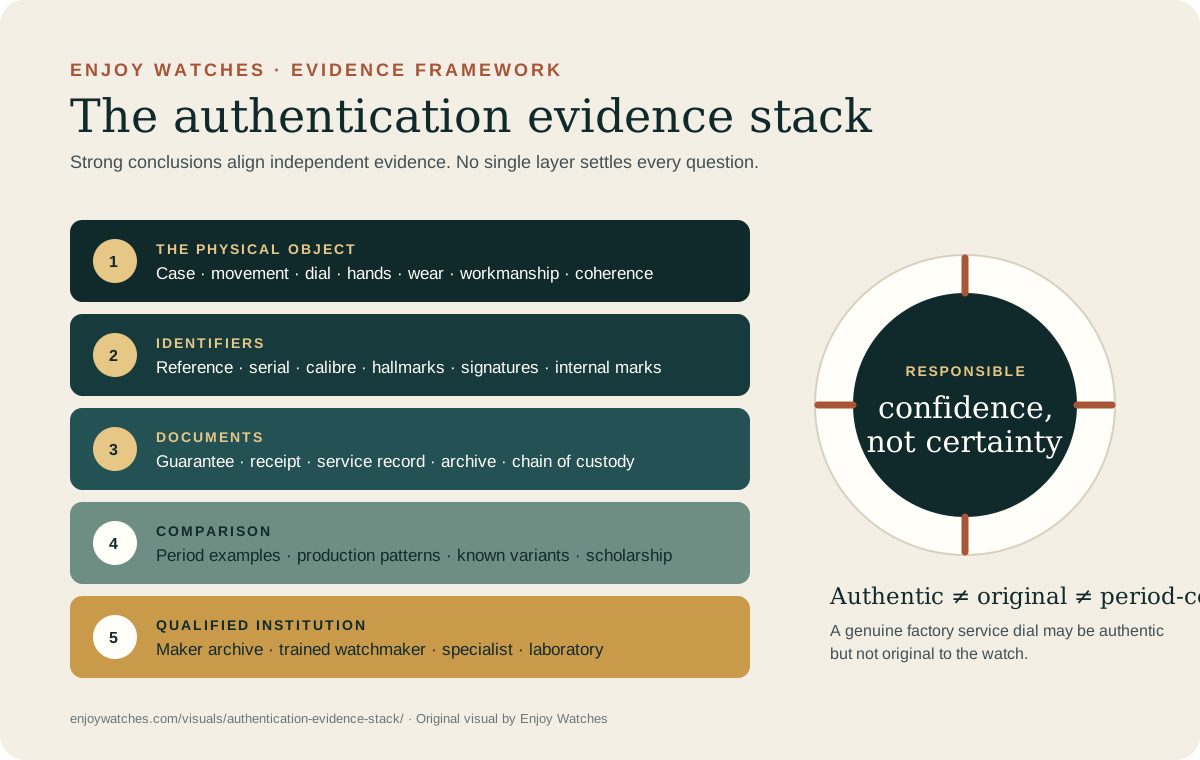
No single photograph, serial number, paper, or signature settles every authenticity question. Strong conclusions align several evidence layers.
Published by Enjoy Watches · Updated August 24, 2026
Visual disclosure
Type: Original explanatory diagram. Creator: Enjoy Watches Research Desk.
Method: Source-led editorial synthesis. Labels, layout, and spatial relationships are illustrative reading aids, not a measured dataset or an inspection of a particular watch.
Evidence boundary: This original explanatory diagram turns the companion guide’s evidence framework into a reading aid. It does not authenticate an object or replace qualified inspection.
Cite this visual
A stable citation and asset record
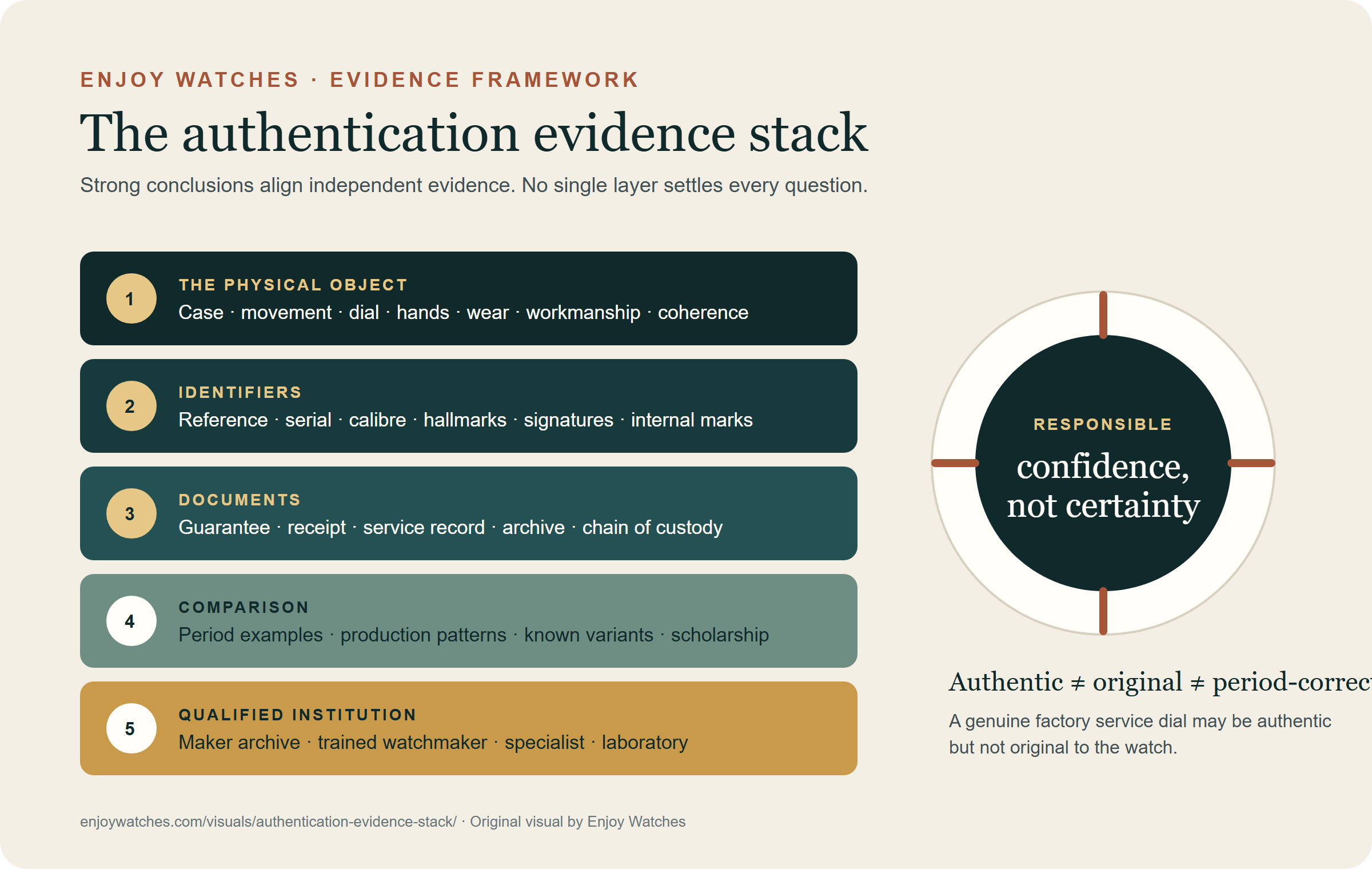
Use the canonical visual page when citing or linking. The public media-kit manifest lists this visual's dated formats and canonical address.
Confidence comes from coherence
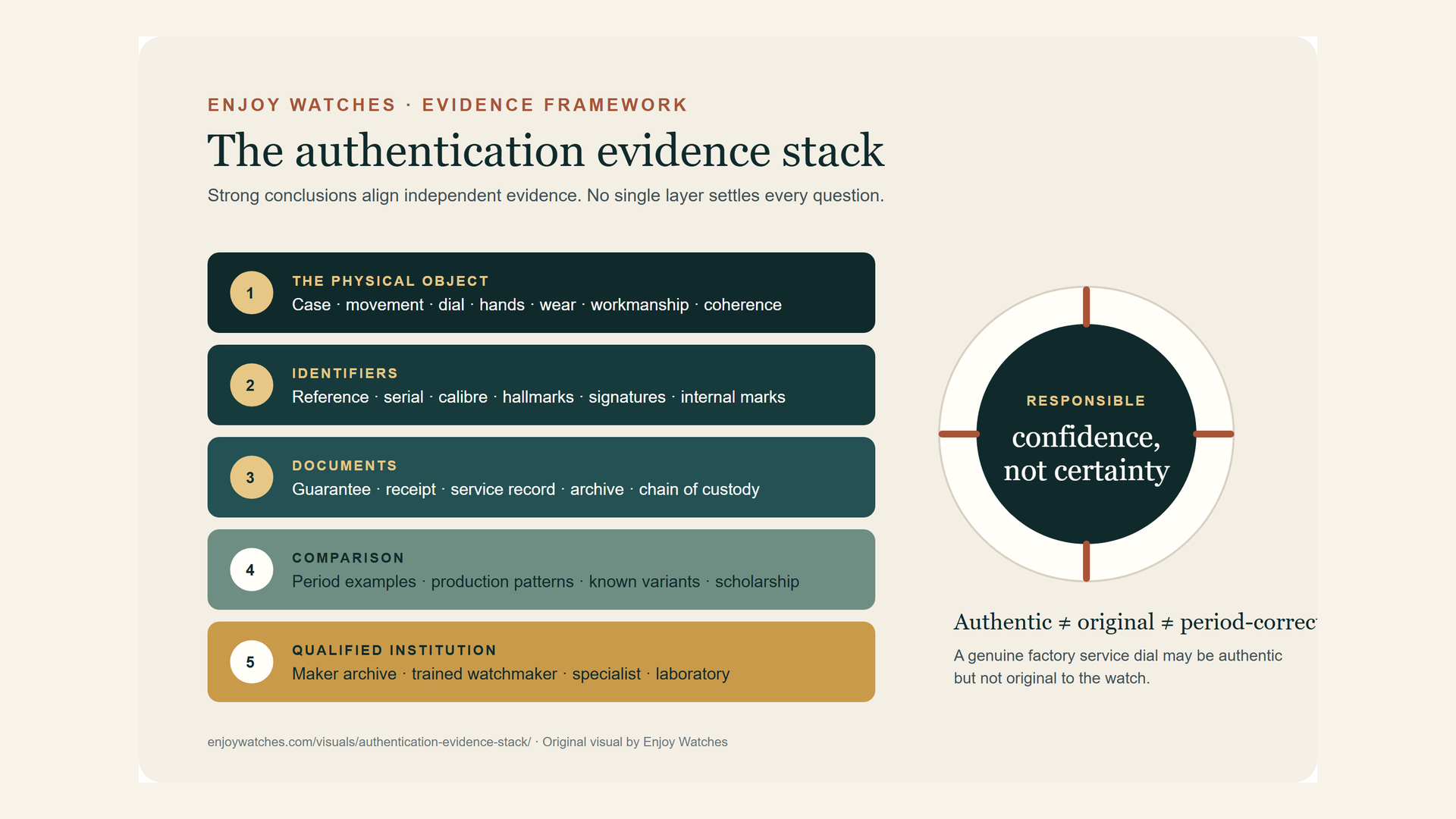
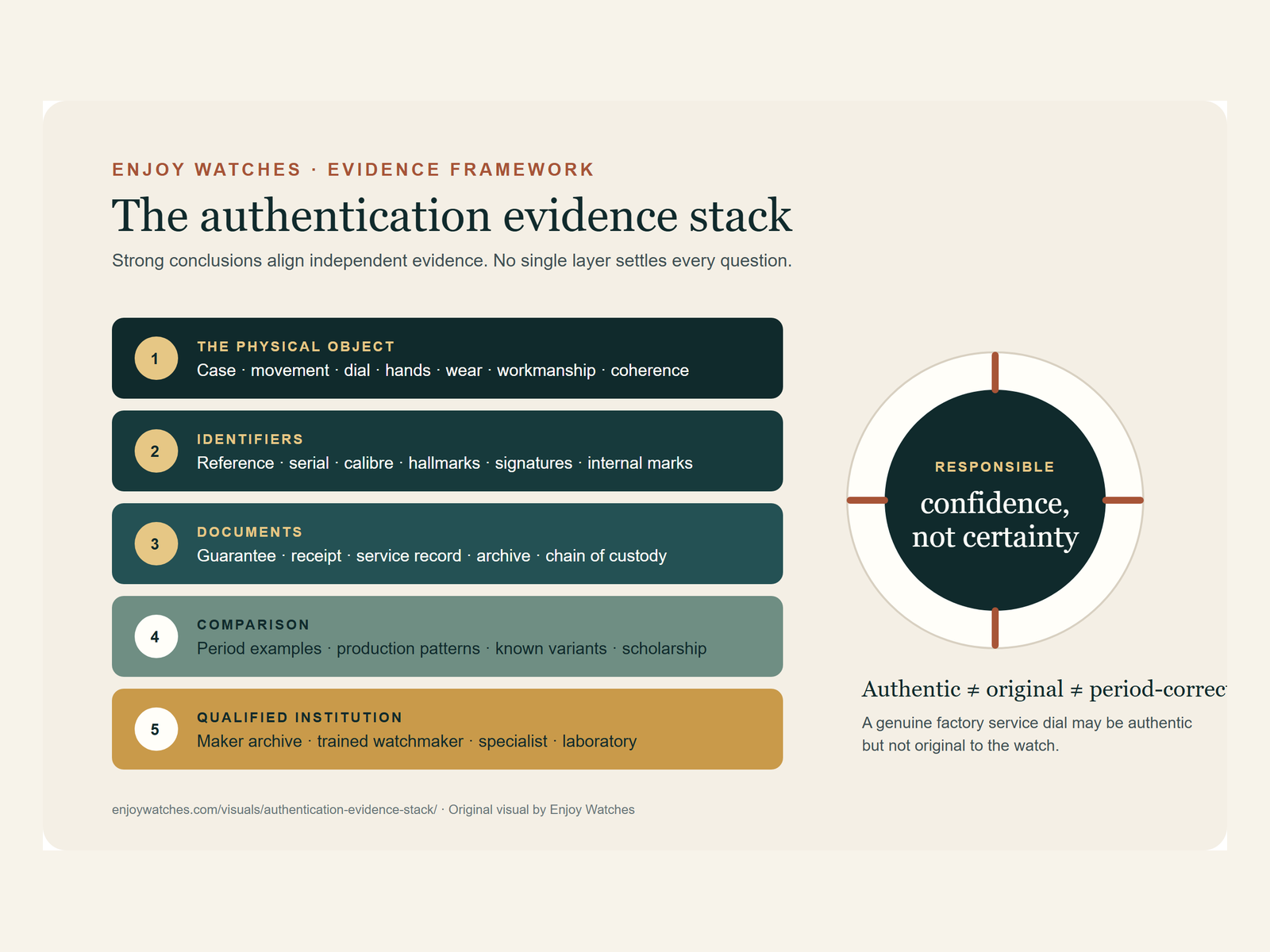
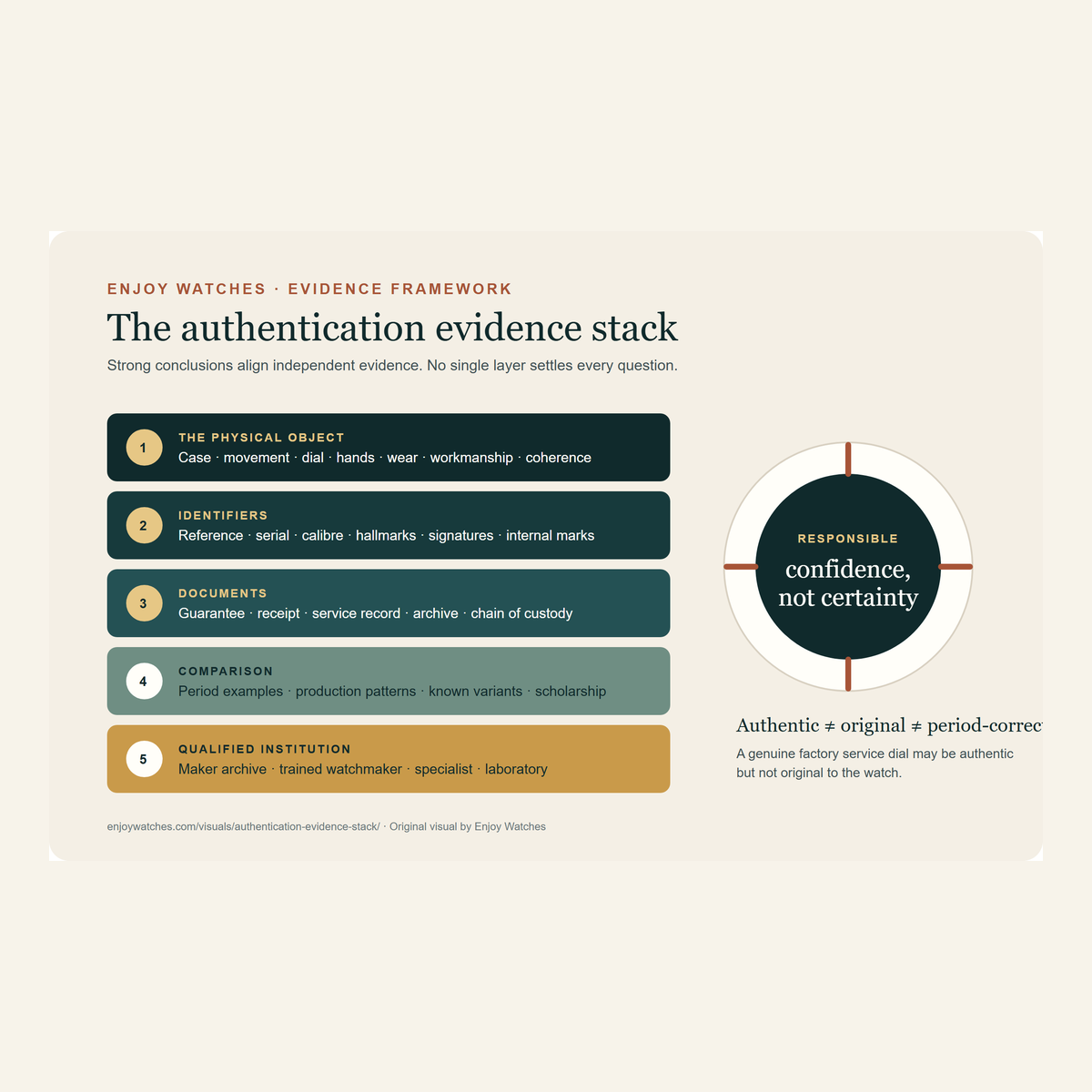
The case, movement, dial, identifiers, paperwork, historical comparisons, and qualified institutional evidence should tell a compatible story. A genuine component can still be a later service replacement.
Reuse and attribution
© 2026 Enjoy Watches. You may link to this page or embed the hosted visual with its source intact. A hosted embed makes a normal image request to this site; the supplied code uses referrerpolicy="no-referrer" to avoid sending the embedding page's address. For republication, modification, print, or other reuse, request permission.
Text version of the diagram
Five evidence layers surround a conclusion: the physical object, its identifiers, its documents, comparison with known examples, and institutional evidence. The central message is confidence rather than certainty, because layers can agree, conflict, or be unavailable.
How to read it
- Record non-invasive observations from the watch itself before searching.
- Separate identifiers and documents from comparison evidence, then note conflicts.
- Escalate to a qualified specialist when the conclusion affects value, safety, or a transaction.
What it does not establish
- One serial number, paper, photograph, or logo does not settle every authenticity question.
- A genuine service component can still be later than the original configuration.
Evidence and scope
This original explanatory diagram turns the companion guide’s evidence framework into a reading aid. It does not authenticate an object or replace qualified inspection.
This visual is a companion to Watch Authenticity vs Originality: What Each Means. That guide’s source list was last checked August 24, 2026 and contains the evidence used for its claims.
Reuse: The full visual reuse terms permit unchanged hosted embeds with source attribution, not rehosting, modification, print distribution, bundling, or commercial reuse. Request permission for another use.