
On this page
- Choose the destination by the question
- What a watch appraisal actually is
- What is not automatically an appraisal?
- How to find a qualified watch appraiser
- Twelve questions to ask before engagement
- Independence and fees
- Prepare the watch without altering it
- Remote, in-person, and multi-specialist appraisals
- Audit the finished report
- Red flags that justify stopping
- Appraisal or market research: the final test
Image disclosure
Type: Generated editorial illustration. Creator: Created for Enjoy Watches using OpenAI image generation.
Prompt-directed synthetic still-life artwork; no real watch, maker, examination, or result is represented. Illustrative only; not evidentiary photography or a source for claims.
About this guide
This guide is published under the organizational byline Enjoy Watches Research Desk. It does not list a named author or independent expert reviewer, and it is not an inspection, appraisal, authentication, or advice for a particular watch. Read the editorial policy before relying on it for a consequential decision.
Publication record
- Risk tier
- Tier 3 — Consequential guidance
- Risk topics
- valuation, tax and estate context, physical safety
- Independent review
- Not completed. Internal source checks are not represented as independent expert review.
- Published
- August 24, 2026
- Last substantive update
- October 10, 2026
- Source links checked
- August 24, 2026
- Next source review target
- November 24, 2026
Dates record publication and source-maintenance activity; they do not claim a named expert approval. See the risk-tier policy and corrections log.
For a formal watch appraisal, use an independent personal-property appraiser with demonstrated watch expertise and experience in your required purpose. For a sale estimate, ask a specialist watch dealer or auction department. For mechanical condition, use a qualified watchmaker. For maker records or service eligibility, contact the manufacturer. One person may offer several services, but an offer to buy, an authentication opinion, and an appraisal are not the same product.
Before choosing anyone, ask the insurer, estate professional, tax adviser, court, or other intended user what valuation definition, effective date, credentials, inspections, and report format it will accept. Requirements vary by jurisdiction and assignment; the best watch expert can still produce the wrong report if the purpose is undefined.
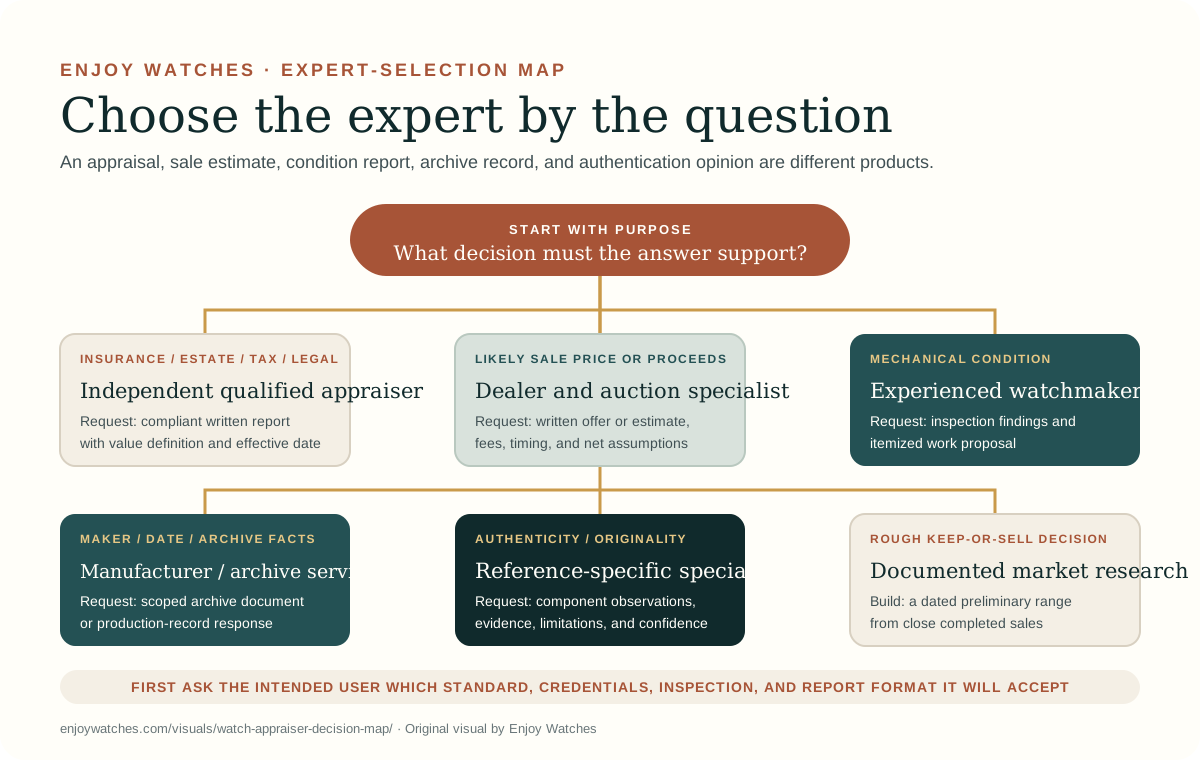
Choose the destination by the question
| What you need | Best starting point | What to request | Important limitation |
|---|---|---|---|
| Insurance scheduling or replacement value | Independent watch-competent personal-property appraiser accepted by the insurer | Written report using the policy’s required replacement basis | Not an estimate of what you would receive in a sale |
| Estate, tax, donation, divorce, or litigation value | Independent appraiser qualified for that assignment and jurisdiction | Compliant report for the prescribed value definition and effective date | Legal or tax rules may control the method and credentials |
| Likely selling price or seller net | Specialist dealer and/or watch auction department | Written offer or estimate with fees and assumptions | A commercial proposal is not automatically an independent appraisal |
| Mechanical condition and service needs | Qualified watchmaker experienced with the maker and period | Inspection findings and itemized work proposal | Mechanical competence alone does not establish market value |
| Maker, production, or archive facts | Manufacturer heritage/archive service, where offered | A precisely scoped archive document or research response | Archive information may not authenticate every present component |
| Authenticity and component originality | Brand- and reference-specialist inspection, sometimes combining watchmaker, dealer, auction, or maker expertise | Written observations, evidence, limitations, and component-by-component conclusions | “Authentic” does not mean entirely original or unmodified |
| A rough keep-or-sell decision | Your own documented market research, followed by relevant specialist opinions | A dated range built from close completed sales | Not suitable for a formal filing or policy merely because it looks detailed |
If more than one question matters, separate the assignments. You might obtain a watchmaker’s condition report, a formal insurance appraisal, and two commercial sale proposals. Comparing their numbers without their definitions would still be misleading.
What a watch appraisal actually is
An appraisal is a developed opinion of value for identified property, a named purpose, an effective date, a defined market, and stated assumptions. The Appraisal Foundation describes a professional appraiser’s work as an independent, well-supported opinion and provides consumer resources for personal property, including jewelry and collectibles (The Appraisal Foundation).
A useful appraisal is therefore more than a number on letterhead. It should explain:
- what watch and accessories were valued;
- who the client and intended users are;
- why the appraisal was prepared;
- which type or definition of value applies;
- the effective valuation date and report date;
- what was physically inspected and by whom;
- identity, condition, component, and provenance findings;
- the market and comparable evidence considered;
- methods, adjustments, assumptions, and limiting conditions;
- conflicts, relevant interests, and assistance from other specialists; and
- the value conclusion, currency, and signature.
Standards and legal requirements differ. In the United States, the Uniform Standards of Professional Appraisal Practice cover personal-property appraisal, but The Appraisal Foundation notes that whether compliance is required depends on law, agency policy, professional membership, or the client (USPAP overview). Outside the United States, other standards, professional bodies, and laws may apply. Ask the intended user rather than assuming one label works everywhere.
What is not automatically an appraisal?
A dealer offer
A dealer’s cash offer answers “What will this business pay now, subject to its terms?” It reflects inventory cost, resale risk, warranty exposure, overhead, and expected margin. It can be excellent evidence of liquidity, but it is not the same as an independent opinion of fair market or replacement value.
An auction estimate
An auction estimate is a pre-sale view of likely bidding in that venue. Christie’s defines an estimate separately from hammer price, price realised, seller commission, and appraisal (Christie’s glossary). Ask whether an auction valuation is a formal appraisal, a consignment estimate, or simply a preliminary opinion from photographs.
A watchmaker’s service estimate
A watchmaker may establish caliber, corrosion, missing parts, functional state, and likely repair needs. Those findings can be crucial valuation evidence. A quote for servicing, however, does not by itself explain collector demand, provenance, comparable sales, or the required value definition.
A manufacturer response
A manufacturer may confirm records, accept a watch for service, or explain what it will replace. Those services are valuable but are not universal certificates of present-component originality or market value. Read the scope of every document.
An online calculator or price chart
Automated estimates can identify a possible range or research lead. They may not see a refinished dial, corrosion, mismatched bracelet, important archive evidence, or unusual provenance. Even a careful personal watch valuation remains market research unless it meets the assignment’s professional and regulatory requirements.
How to find a qualified watch appraiser
Start with the intended user. Insurers, fiduciaries, attorneys, tax professionals, and courts may maintain requirements or accept only particular report standards. Get those requirements in writing before commissioning work.
Then search professional appraisal organizations and verify the member in the organization’s own current public register. The Appraisal Foundation explains that it does not issue personal-property credentials; professional organizations and qualified educational institutions may implement credentials based on its personal-property criteria (personal-property appraisal overview). Membership alone is not enough. Confirm the designation’s discipline, current status, education, experience requirements, continuing education, ethics code, and complaint process.
Official starting points include the American Society of Appraisers’ Find an Appraiser directory and the Appraisers Association of America directory. Search the relevant personal-property or gems-and-jewelry discipline using terms such as “watch” or “horology.” A directory listing is not an endorsement, so apply the screening questions below and confirm that the person—not merely the firm—has the required watch and assignment experience.
In the UK, the National Association of Jewellers’ Institute of Registered Valuers directory includes watch appraisers. It is a starting point for finding a person to interview; confirm their experience with your watch and the report requirements of your insurer, solicitor, executor, or other intended user before engaging them.
Next, test watch-specific competence. Ask for a résumé or qualifications statement and anonymized sample report for a comparable assignment. Relevant experience should match the object and the use: modern luxury retail is different from early wristwatches, complicated pocket watches, military watches, jewelry watches, or disputed vintage components.
Specialist auction departments, established watch dealers, museum or heritage professionals, and experienced watchmakers can help identify appropriate expertise, but a referral is not a credential. Interview the appraiser yourself and disclose who referred you.
Twelve questions to ask before engagement
- What exact value definition will you use, and why does it fit my purpose?
- Have you appraised this maker, period, and type of watch for this purpose?
- Which current appraisal credentials and standards apply to your work?
- Will you personally inspect the watch? If not, how will the limitation affect the conclusion?
- Can you assess the movement, dial, case, and components, or will another specialist assist?
- How will you research completed sales, and how will you distinguish asks, hammer prices, all-in results, and dealer offers?
- What photographs, documents, and accessories should I provide?
- What will the written report contain, and will the intended user accept that format?
- How are your fees calculated, including inspection, research, photography, travel, and specialist consultation?
- Do you, your employer, or the referrer have any interest in buying, selling, insuring, or financing the watch?
- Who is responsible for security, custody, shipping, and insurance while the watch is away from me?
- How will errors, new evidence, updates, and complaints be handled?
The American Society of Appraisers’ consumer guidance similarly recommends asking about education, designations, relevant expertise, continuing education, standards, fees, and report contents. It also warns consumers about purchase interests and fees tied to the appraised value (ASA consumer FAQs). Treat those as strong independence checks while also confirming the rules that govern your jurisdiction and assignment.
Independence and fees
An appraiser should disclose interests and incentives that could affect—or appear to affect—the conclusion. The cleanest formal arrangement is usually a fee based on defined work, not on reaching a desired value, earning a percentage of value, or completing a later sale.
Common structures include a fixed assignment fee, hourly research and inspection time, or agreed charges for travel, photography, laboratory work, and outside specialists. There is no responsible universal price because complexity varies. An ordinary recent watch with complete records is a different assignment from a rare unsigned complication with disputed components and a historical effective date.
Request a written engagement agreement that identifies scope, deliverables, fees, timing, custody, confidentiality, cancellation, and any conflicts. If the same firm wants to buy or consign the watch, ask for the commercial proposal separately and preserve the appraisal’s disclosure of that interest. For a consequential legal, tax, or insurance assignment, the intended user may require independence beyond disclosure.
Prepare the watch without altering it
Give every candidate the same evidence so their proposals are comparable:
- clear photographs of the dial, caseback, sides, crown, bracelet, clasp, hallmarks, engravings, and accessories;
- reference and serial information through a secure channel;
- guarantee, receipt, service records, archive correspondence, and old photographs;
- known replacements, repairs, polishing, damage, and functional problems;
- the required purpose, effective date, currency, market, and deadline; and
- the name and written requirements of the intended user, when appropriate.
Do not polish or service a potentially collectible watch merely to prepare for appraisal. Do not open it yourself. A qualified appraiser can arrange or recommend the least invasive inspection needed. Preserve removed parts and require any proposed testing to be explained before it occurs.
If a watch may contain radium lume—especially if its crystal is broken or material is loose—do not open or disturb it. The US EPA advises against taking apart radium watches; disclose the condition before arranging inspection or transport and seek applicable local radiation-safety guidance.
Remote, in-person, and multi-specialist appraisals
A remote opinion may be adequate for initial triage, a sale submission, or an assignment where the limitation is accepted and clearly reported. Photographs can show configuration and visible condition but may conceal corrosion, refinishing, movement issues, altered hallmarks, or subtle component differences.
An in-person inspection is stronger when identity, condition, material, or originality materially affects value. Some watches need a team: a personal-property appraiser to define and report the valuation, a watchmaker to examine the movement, a gemologist for stones, or a brand specialist for reference-specific component analysis. The report should identify who did what and how that work informed the result.
Never send a watch based only on an unsolicited message or a search advertisement. Confirm the business using independently obtained contact information. Before transfer, document condition and numbers, obtain a receipt, agree on insurance and return shipping, and understand whether the recipient may open or test the watch.
Audit the finished report
Use this checklist before relying on it:
- The watch, bracelet, accessories, and documents are individually identified.
- The purpose, intended users, value definition, market, currency, and effective date are explicit.
- The report distinguishes direct observations from owner statements and assumptions.
- Inspection scope and limitations are disclosed.
- Condition is described by component rather than with a single adjective.
- Authenticity, originality, service replacements, aftermarket parts, and unknowns are not collapsed together.
- Comparable sales are close enough to be meaningful and their price basis is labeled.
- Active listings are not presented as completed transactions.
- Material adjustments and exclusions are explained.
- Conflicts, outside assistance, and relevant commercial interests are disclosed.
- The conclusion has an effective date, currency, signature, and appraiser qualifications.
- The report meets the intended user’s stated requirements.
The discipline of supporting the conclusion matters. IRS Publication 561, for example, says that for its U.S. charitable-donation context, comparable-sale weight depends on similarity, timing, transaction circumstances, and market conditions, and that an appraiser’s opinion should be thorough and supported by facts and experience (IRS). That publication does not govern every appraisal, but it illustrates why a résumé plus a large number is not enough.
Red flags that justify stopping
- A guaranteed high value before the watch is identified.
- A report copied from an active marketplace listing.
- Pressure to sell immediately to the person assigning the value.
- Refusal to explain the value type, evidence, fee, or conflict.
- A fee contingent on the conclusion or percentage of appraised value.
- Claims that one certificate proves the watch is entirely original.
- No relevant watch experience, standards, or written deliverable.
- A request to surrender the watch without custody and insurance terms.
- Instructions to polish, restore, or discard old parts before inspection.
- A single number with no effective date, market, assumptions, or evidence.
Appraisal or market research: the final test
Use market research when you are deciding whether further work is worthwhile, comparing selling channels, or establishing a preliminary range. Use a formal appraisal when another party will rely on the conclusion, the purpose is regulated or contested, or the required report must withstand review.
Keep the two files separate. Your market worksheet can contain exploratory listings, notes, and scenarios. The appraisal should contain only the evidence, methods, and disclosures appropriate to its defined assignment. If you later decide to sell, compare the appraisal’s value definition with actual expected proceeds; do not assume the appraisal is an offer.
Start by identifying the required watch value type, then assemble close evidence with the comparable-sales guide. If the real objective is a sale, compare specialist channels in Where Should I Sell My Watch? and keep every offer separate from the formal appraisal.
Sources and assumptions
Links checked August 24, 2026. Time-sensitive claims are scheduled for review by November 24, 2026.
- The Appraisal Foundation: Consumer ResourcesRole: Professional association or standards source. Scope: Supports the organization's published US appraisal resources or standards scope; not proof of an appraiser's competence or a watch's value.
- The Appraisal Foundation: Personal Property AppraisalRole: Professional association or standards source. Scope: Supports the organization's published US appraisal resources or standards scope; not proof of an appraiser's competence or a watch's value.
- The Appraisal Foundation: Uniform Standards of Professional Appraisal PracticeRole: Professional association or standards source. Scope: Supports the organization's published US appraisal resources or standards scope; not proof of an appraiser's competence or a watch's value.
- American Society of Appraisers: FAQs for ConsumersRole: Professional association or standards source. Scope: Supports the association's published consumer guidance; not a completed appraisal or jurisdiction-independent rule.
- American Society of Appraisers: Find an AppraiserRole: Professional association or standards source. Scope: Supports only the association's directory access and stated membership context; listing is not an endorsement or proof of fit for a particular assignment.
- Appraisers Association of America: Find an AppraiserRole: Professional association or standards source. Scope: Supports only the association's directory access and stated membership context; listing is not an endorsement or proof of fit for a particular assignment.
- National Association of Jewellers: Find a Jewellery Valuer (IRV)Role: Professional association or standards source. Scope: Supports the availability of a UK directory that includes watch appraisers; a listing alone does not establish competence for a particular watch or assignment.
- IRS Publication 561: Determining the Value of Donated PropertyRole: Government or intergovernmental source. Scope: Supports the named US tax publication only for its stated purpose and jurisdiction; not a universal appraisal or tax rule.
- Christie's Auction GlossaryRole: Commercial first-party policy. Scope: Supports only the named auction house's published terminology process or fee guidance at the source-check date; the actual sale agreement and live terms control.
- US EPA: Radioactivity in AntiquesRole: Government or intergovernmental source. Scope: Supports general US agency safety guidance about radioactive antiques; not an object-specific diagnosis test or disposal instruction.
Send the claim and its source to [email protected]. Material corrections are logged. The contact page records the current mailbox-delivery limitation; retain your report until receipt is acknowledged.