
On this page
- The short valuation process
- What creates watch value?
- Identify the object before researching the price
- Grade the watch by component
- Build a market range from completed sales
- Convert gross market evidence into what you might receive
- Why online “watch values” go wrong
- A confidence scale for your estimate
- When to obtain a specialist opinion
- Your safest next steps
- Further reading
Image disclosure
Type: Generated editorial illustration. Creator: Created for Enjoy Watches using OpenAI image generation.
Prompt-directed synthetic still-life artwork; no real watch, price, seller, or recommendation is represented. Illustrative only; not evidentiary photography or a source for claims.
About this guide
This guide is published under the organizational byline Enjoy Watches Research Desk. It does not list a named author or independent expert reviewer, and it is not an inspection, appraisal, authentication, or advice for a particular watch. Read the editorial policy before relying on it for a consequential decision.
Publication record
- Risk tier
- Tier 3 — Consequential guidance
- Risk topics
- valuation, market evidence
- Independent review
- Not completed. Internal source checks are not represented as independent expert review.
- Published
- August 24, 2026
- Last substantive update
- September 28, 2026
- Source links checked
- August 24, 2026
- Next source review target
- November 24, 2026
Dates record publication and source-maintenance activity; they do not claim a named expert approval. See the risk-tier policy and corrections log.
First decide what the number is for. If you plan to sell, estimate what a buyer might pay for this specific watch, in its present condition, through a particular channel and at a particular time. That calls for a supported range—not a number inferred from its logo, age, or highest online listing. An insurance replacement figure or a formal value for an estate, tax, or legal purpose may use a different definition and require a qualified appraisal. See watch value types or where to get a watch appraised before using a resale range for either purpose.
If the exact model is still unknown, begin with the safe watch-identification workflow. If you only need to decide whether an unfamiliar older watch merits deeper research, use the old-watch first assessment before attempting a full valuation.
Build the evidence file before chasing a number. Open the valuation research worksheet to record identity, condition, documents and unresolved gaps, then use the comparable-sale normalizer to put documented observations on the same price basis. Both run locally and produce research scenarios, not an appraisal.
The short valuation process
Start with these six tasks, in order:
- Identify the exact reference, material, movement, approximate period, dial configuration and bracelet.
- Record condition and known service or replacement parts component by component.
- Gather the box, guarantee, receipts, service invoices, spare links and ownership evidence.
- Find several recent completed sales of genuinely similar examples.
- Put every price on the same basis: date, currency, fees, tax, warranty and selling channel.
- Report a range, a valuation date and the uncertainties that could change it.
Do not polish the case, clean the dial, relume the hands or discard old parts before doing this work. An attempt to make a vintage watch look newer can remove evidence that a collector values.
What creates watch value?
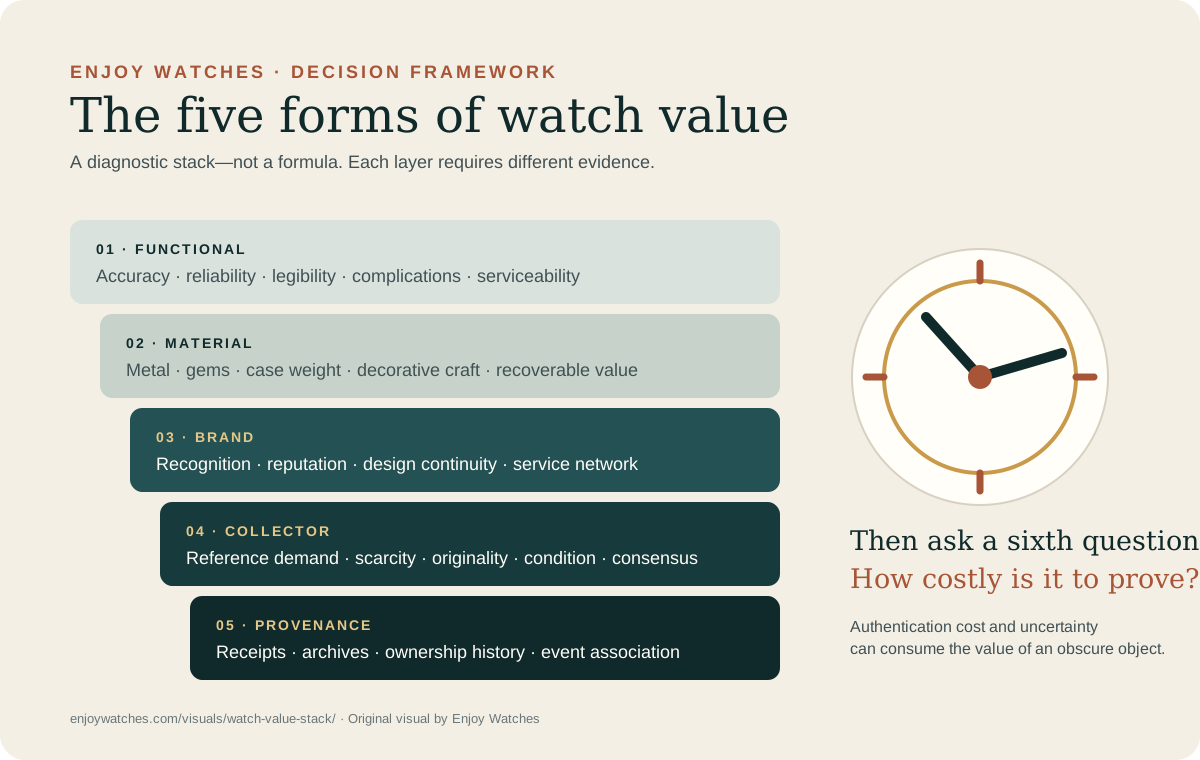
A watch can carry several kinds of value at once. They do not always move together.
| Value layer | What creates it | Evidence to collect | Common mistake |
|---|---|---|---|
| Functional | Reliability, legibility, complications and serviceability | Running state, service report, functions tested | Assuming “running” means recently serviced or water-resistant |
| Material | Precious-metal content, gemstones and workmanship | Hallmarks, dimensions, case construction, gem documentation | Valuing every gold watch only as scrap—or assuming gold guarantees collector demand |
| Brand | Recognition, design continuity, service support and buyer trust | Correct maker and model identification | Applying a brand-wide price trend to every reference |
| Collector | Demand for the reference, configuration, condition and originality | Close completed sales and reference scholarship | Treating rarity as valuable when few people want the object |
| Provenance | Credible ownership, event association or an unusually complete history | Receipts, correspondence, dated photographs and chain of custody | Pricing an uncorroborated story as if it were proven |
The strongest market often appears where buyers can identify the watch, trust the description, compare it with other examples and resell it. An obscure watch may be genuinely rare yet illiquid. A familiar reference with many transactions can be easier to value and sell.
Identify the object before researching the price
One incorrect digit in a reference can put you in the wrong market. Record what is visible without forcing the caseback or removing a bracelet if you lack the tools and experience.
Your identification sheet should include:
- brand and model name as printed;
- complete reference and serial numbers, with sensitive digits kept out of public photographs;
- case metal, dimensions and hallmarks;
- movement or caliber, but only if safely documented;
- dial color, layout, signatures and luminous material;
- bezel, crown, pushers, bracelet, clasp and end-link markings;
- approximate production and purchase dates;
- service, repair and ownership history; and
- every accessory and document.
Names such as “Submariner” or “Speedmaster” describe families containing materially different references and generations. “Vintage Omega” or “old Rolex” is not yet an identification suitable for valuation.
Grade the watch by component
Do not compress the condition into “excellent.” A buyer may accept a scratched crystal but discount a refinished dial heavily. Use neutral observations:
| Component | Record | Questions that affect value |
|---|---|---|
| Dial and lume | Marks, fading, moisture, printing and luminous plots | Is the surface period-correct, refinished, relumed or uncertain? |
| Case | Scratches, dents, corrosion, engravings and geometry | Are bevels and hallmarks clear? Is there evidence of refinishing? |
| Hands and bezel | Style, aging and fit with the reference | Original-to-watch, period-correct, service replacement or aftermarket? |
| Movement | Running state, functions, corrosion and service evidence | What was actually inspected, and what remains unknown? |
| Bracelet and clasp | Reference marks, links, stretch and repairs | Correct type and period? Complete enough for the intended wrist? |
| Accessories | Guarantee, receipt, boxes, tags and spare parts | Do numbers and dates agree with the watch? |
Photographs help, but they cannot settle every question. Current Phillips watch-sale conditions explicitly caution that images may not convey full condition, that previous repair can involve replacement parts, and that water resistance is not guaranteed (Phillips). Use a physical inspection for a consequential purchase, sale or service decision.
Build a market range from completed sales
Good comparables share as many of these attributes as possible: exact reference, generation, case material, dial variant, approximate period, condition, component history, bracelet, completeness and seller support. Prefer recent arm’s-length transactions in the relevant market. A famous or old name can improve recognition, but brand history is context rather than a transferable premium.
The general valuation principle is not unique to watches. The IRS describes fair market value as a willing-buyer/willing-seller price and lists comparable sales, condition, timing and market circumstances among the relevant evidence (IRS Publication 561). Tax rules vary by jurisdiction and purpose, but the evidence discipline is useful for ordinary watch research.
Classify each number before using it:
- Dealer asking price: a seller’s proposal, often including service, warranty, overhead and room to negotiate.
- Completed private or dealer sale: useful when the final price and terms are known.
- Auction hammer: the accepted bid before the buyer’s premium.
- Auction all-in price: normally hammer plus buyer’s premium; tax treatment can differ.
- Dealer cash bid: an executable wholesale-style offer reflecting speed and transferred risk.
Christie’s defines auction estimates, reserves, hammer prices and buyer’s premiums separately (Christie’s glossary). Mixing them can create a large false difference even when the underlying watches are similar.
For a repeatable method, use the comparable-sales guide.
Convert gross market evidence into what you might receive
The most visible price is rarely the seller’s net proceeds. Use this simple framework:
Illustrative seller proceeds = plausible completed-sale price − channel fees − payment and shipping costs − necessary work
This is a scenario, not a payment prediction. Keep uncertainty about whether and when a sale will happen separate from the costs you can enter. Condition, returns, warranty exposure, time in inventory and price volatility can change the outcome; they are not one fixed deduction. A dealer offer can sit below a dealer retail ask because the dealer accepts some of those costs and risks. A private sale may promise a higher gross number while requiring more time, screening, secure payment, insured shipping and dispute exposure.
Compare actual options on the same basis:
| Option | Number to request | Also record |
|---|---|---|
| Direct dealer sale | Written cash offer | Inspection conditions, payment timing and offer expiry |
| Consignment | Expected selling range and seller net | Commission, expenses, custody, markdown authority and payout terms |
| Auction | Estimate, reserve and net-proceeds illustration | Seller commission, photography/insurance charges and unsold terms |
| Private sale | Realistic completed price | Platform/payment fees, shipping, returns and your time |
Why online “watch values” go wrong
The highest listing is not the market
An unsold ask measures seller expectation. It may be stale, aspirational, incorrectly described or intentionally positioned above the expected negotiated price.
A record watch is usually not comparable
Celebrity ownership, exceptional preservation, a rare dial or intense auction competition can make one object an upper-tail event. Its price does not transfer to an ordinary example with the same model name.
Accessories do not apply one universal premium
A correct guarantee and complete presentation set can matter greatly for a recent collectible reference, less for an ordinary older watch, and dramatically for a rare watch when the documents establish provenance. Compare like with like instead of adding a stock percentage.
“Original” and “unpolished” are conclusions, not photo filters
Surface geometry and component details support an opinion, but photographs seldom prove an uninterrupted history. State “shows no obvious evidence in the supplied images” when that is all the evidence permits.
Retail, insurance and sale values answer different questions
An insurance replacement figure can be higher than expected resale proceeds because it asks what replacement through a suitable source may cost. Learn the distinctions in watch value types before relying on an appraisal number.
A confidence scale for your estimate
| Confidence | Evidence | How to report it |
|---|---|---|
| High | Several close, recent completed sales; clear condition and component history | Narrower range with valuation date and cited comparables |
| Medium | Some close sales, plus minor condition or configuration uncertainty | Wider range and scenarios for the unresolved issue |
| Low | Few transactions, uncertain identity, unusual provenance or no physical inspection | Preliminary range only; seek specialist inspection |
Widening the range is not failure. It is the correct response to weak evidence.
When to obtain a specialist opinion
Professional help is worthwhile when the watch may be rare, the dial or movement is disputed, provenance could materially change demand, the case has important hallmarks, or the intended use is insurance, tax, probate, litigation or a major sale. Choose expertise by maker and period, ask what was physically inspected, and request the evidence behind the conclusion.
For legal, tax or insurance use, confirm the required valuation definition, date, credentials and report format with the relevant authority before commissioning the work. A marketplace estimate is not automatically an appraisal, and this guide is not one.
Your safest next steps
- Photograph the watch and every accessory before any work.
- Create an exact identification and condition sheet.
- Preserve removed parts and all service records.
- Research at least three close completed sales where possible.
- Obtain multiple written sale options and compare expected net proceeds.
- Escalate unresolved authenticity, originality or provenance questions before quoting a confident value.
That process will not manufacture certainty, but it will replace a hopeful guess with a valuation another person can inspect, challenge and update.
Turn the framework into a research file with the valuation worksheet and normalize observed sales with the comparable-sale tool.
Further reading
Sources and assumptions
Links checked August 24, 2026. Time-sensitive claims are scheduled for review by November 24, 2026.
- IRS Publication 561: Determining the Value of Donated PropertyRole: Government or intergovernmental source. Scope: Supports the named US tax publication only for its stated purpose and jurisdiction; not a universal appraisal or tax rule.
- Christie's Auction GlossaryRole: Commercial first-party policy. Scope: Supports only the named auction house's published terminology process or fee guidance at the source-check date; the actual sale agreement and live terms control.
- Phillips Geneva Online-Only Watches Conditions of Sale (effective April 12, 2026)Role: Commercial first-party policy. Scope: Supports the named house's stated conditions for the identified sale format and date; not universal auction terms or a quote for another transaction.
Send the claim and its source to [email protected]. Material corrections are logged. The contact page records the current mailbox-delivery limitation; retain your report until receipt is acknowledged.