Original visual guide
Old Watch Value Triage
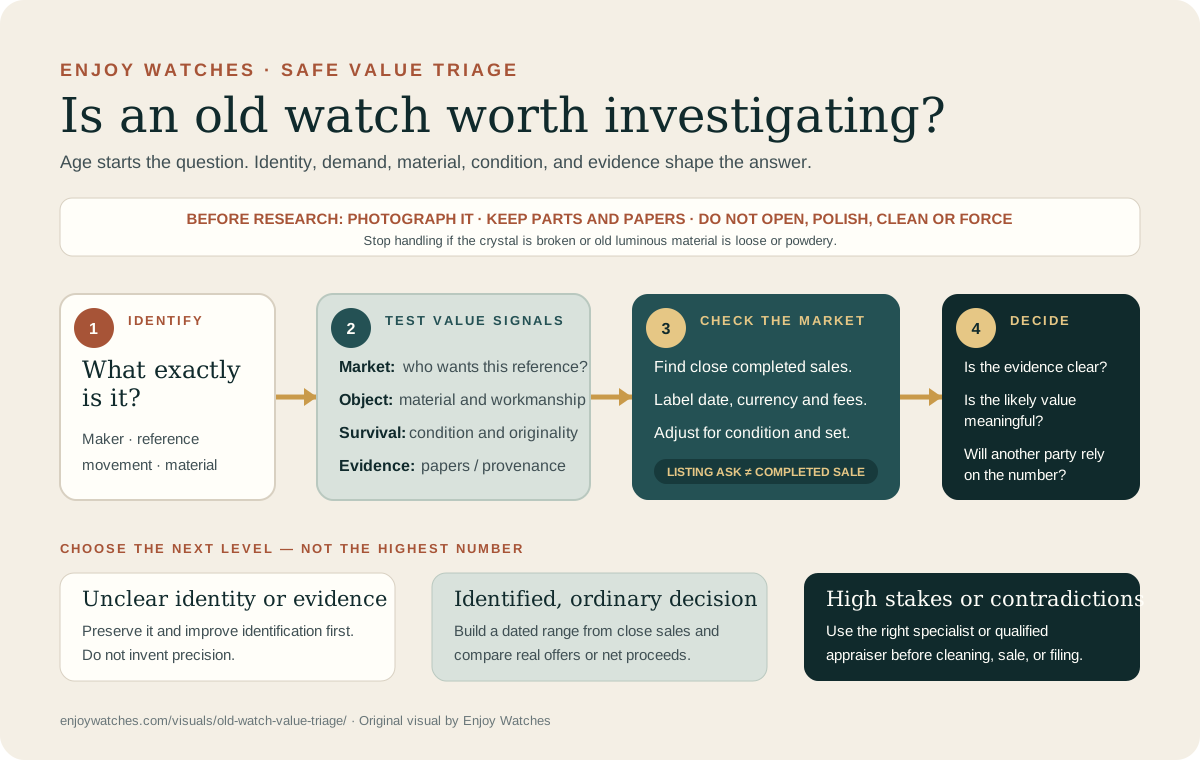
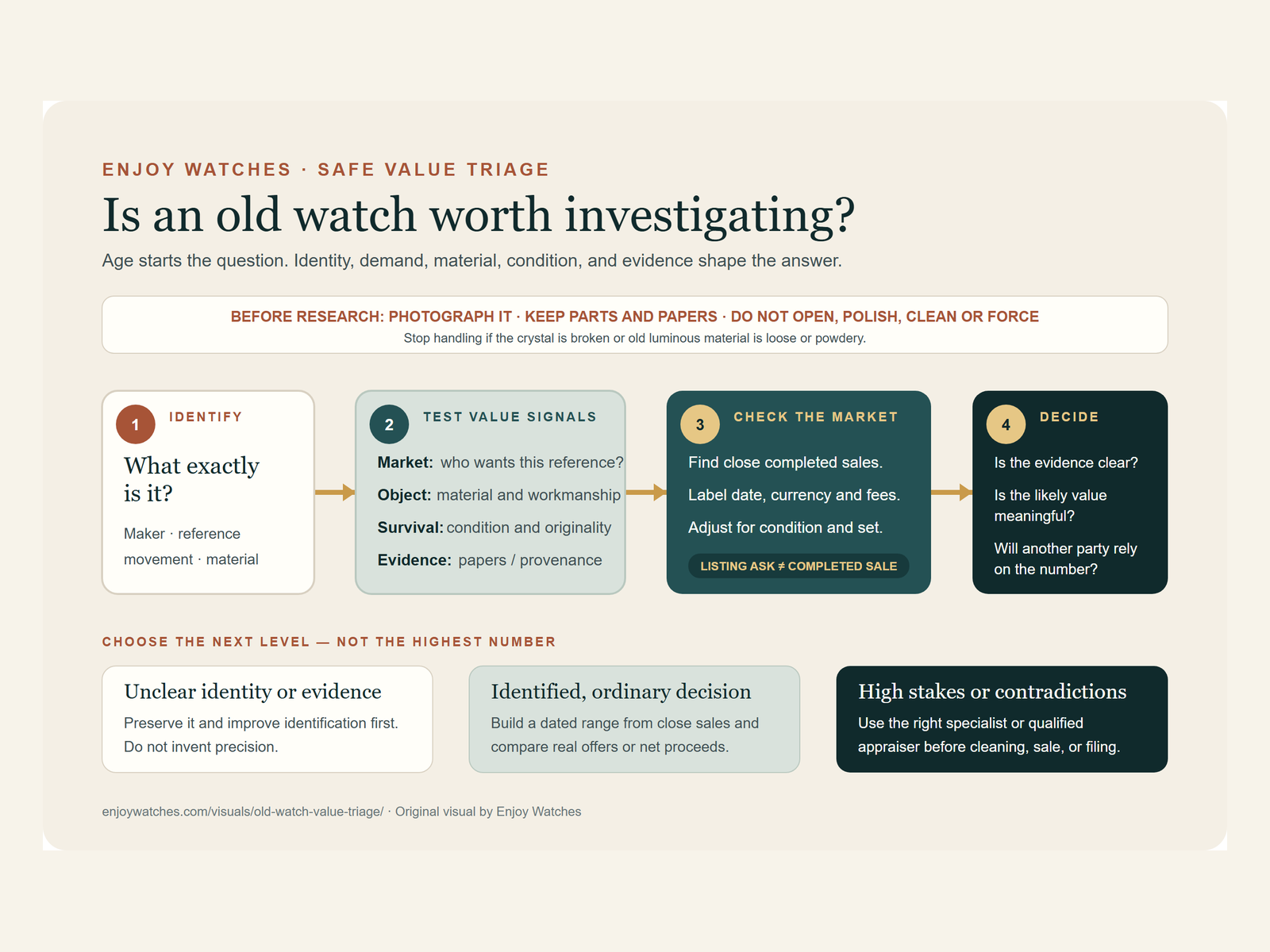
A preservation-first flow for deciding whether an old watch needs better identification, documented market research, or a qualified specialist appraisal.
Published by Enjoy Watches · Updated August 24, 2026
Visual disclosure
Type: Original explanatory diagram. Creator: Enjoy Watches Research Desk.
Method: Source-led editorial synthesis. Labels, layout, and spatial relationships are illustrative reading aids, not a measured dataset or an inspection of a particular watch.
Evidence boundary: This original explanatory flowchart summarizes the companion guide’s preservation and research sequence. It is not an appraisal, a price tool, or an object inspection.
Cite this visual
A stable citation and asset record
Use the canonical visual page when citing or linking. The public media-kit manifest lists this visual's dated formats and canonical address.
Escalate according to stakes
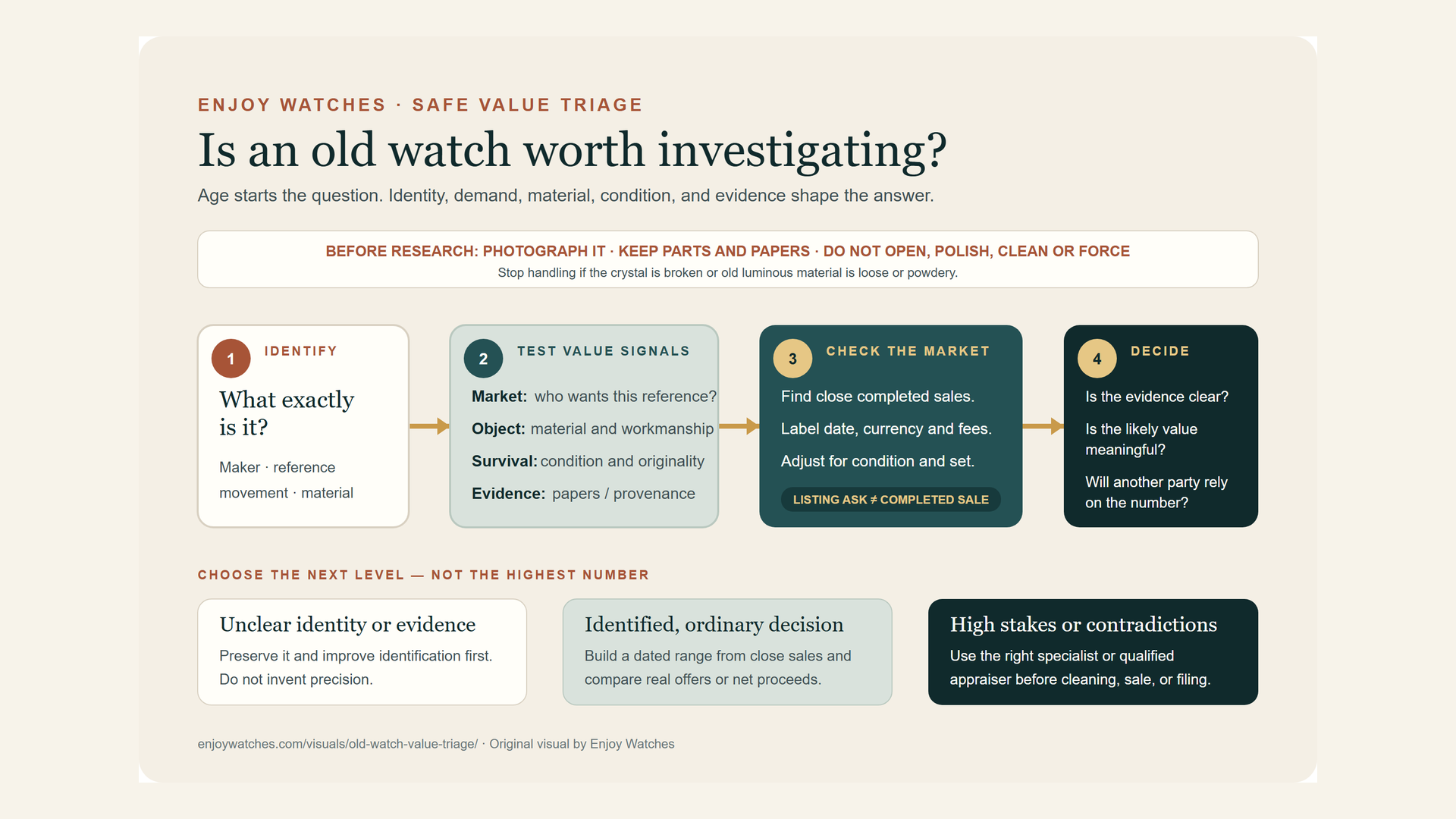
An unclear identity calls for better evidence before a price. A well-identified ordinary watch may only need a dated range from close completed sales. Contradictions, consequential value, fragile condition, or reliance by an insurer, estate, tax authority, or court justify the appropriate specialist or qualified appraiser.
Reuse and attribution
© 2026 Enjoy Watches. You may link to this page or embed the hosted visual with its source intact. A hosted embed makes a normal image request to this site; the supplied code uses referrerpolicy="no-referrer" to avoid sending the embedding page's address. For republication, modification, print, or other reuse, request permission.
Text version of the diagram
A preservation-first flow asks the reader to secure and identify an old watch, test market, object, survival, and evidence signals, compare completed sales, then choose between more identification, documented market research, or a qualified appraisal.
How to read it
- Preserve the watch and all associated material before cleaning, servicing, or pricing it.
- Test the identity, condition, originality, demand, materials, and documents that could change the next step.
- Escalate to evidence-led research or a suitable specialist when the stakes or contradictions justify it.
What it does not establish
- Age alone is not a value multiplier.
- The flow does not calculate a value or tell a reader to sell, service, or alter a watch.
Evidence and scope
This original explanatory flowchart summarizes the companion guide’s preservation and research sequence. It is not an appraisal, a price tool, or an object inspection.
This visual is a companion to Is My Old Watch Worth Money? A Safe First Assessment. That guide’s source list was last checked August 24, 2026 and contains the evidence used for its claims.
Reuse: The full visual reuse terms permit unchanged hosted embeds with source attribution, not rehosting, modification, print distribution, bundling, or commercial reuse. Request permission for another use.