
Original visual guide
Primary and Secondary Watch Markets
New-watch distribution and pre-owned resale use different sellers, price anchors, warranties, information, and forms of supply control.
Published by Enjoy Watches · Updated August 24, 2026
Visual disclosure
Type: Original explanatory diagram. Creator: Enjoy Watches Research Desk.
Method: Source-led editorial synthesis. Labels, layout, and spatial relationships are illustrative reading aids, not a measured dataset or an inspection of a particular watch.
Evidence boundary: This original explanatory diagram summarizes commercial roles described in the companion history guide. It is not a map of every seller, platform, or warranty arrangement.
Cite this visual
A stable citation and asset record
Use the canonical visual page when citing or linking. The public media-kit manifest lists this visual's dated formats and canonical address.
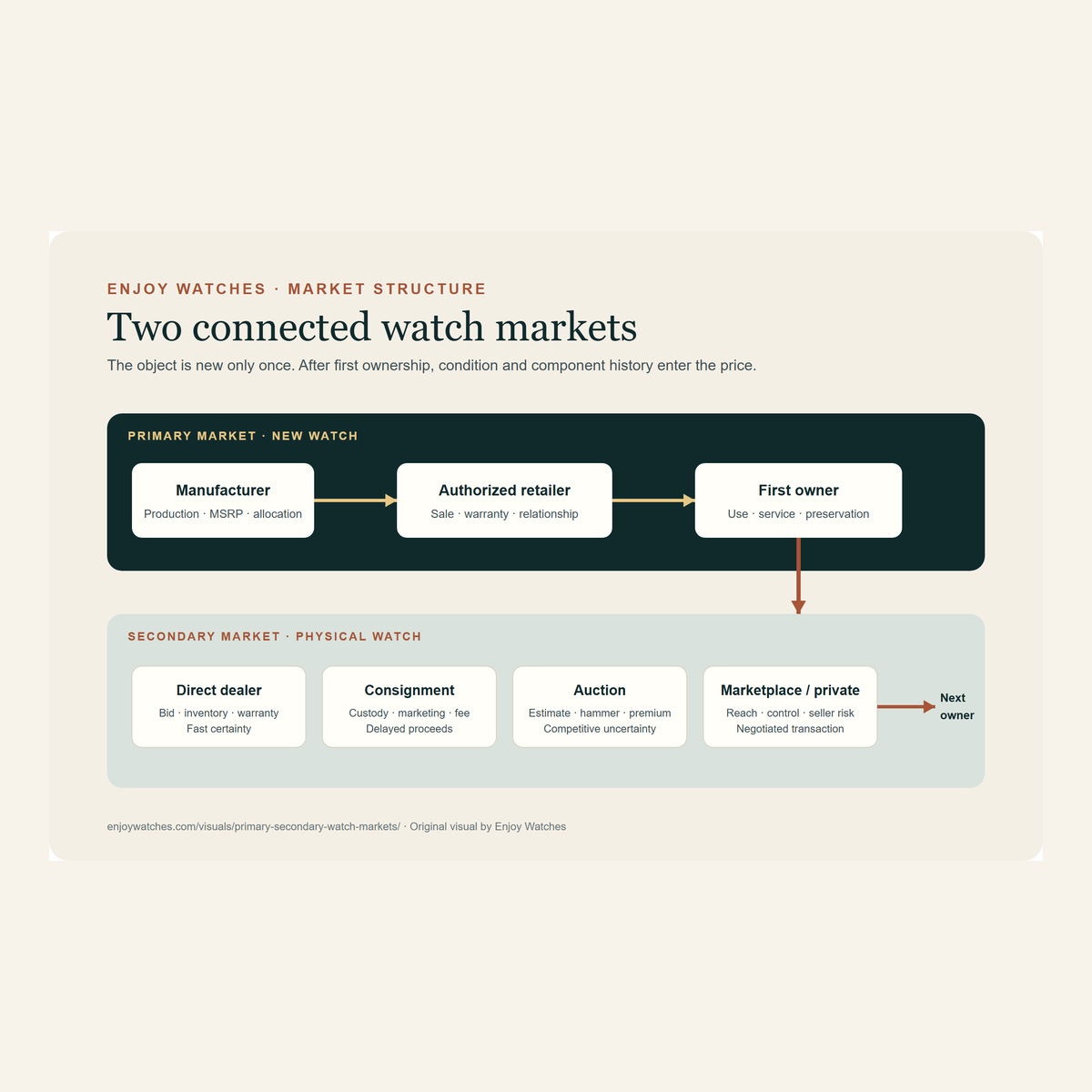
Two connected systems
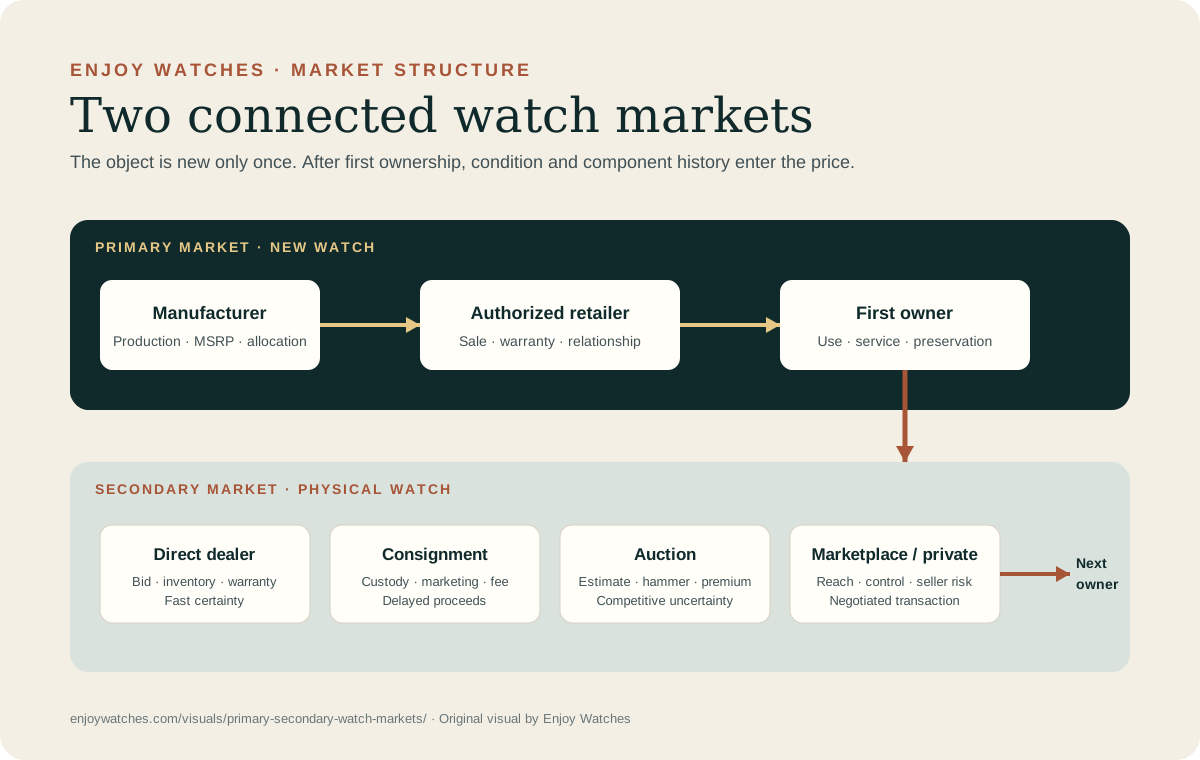
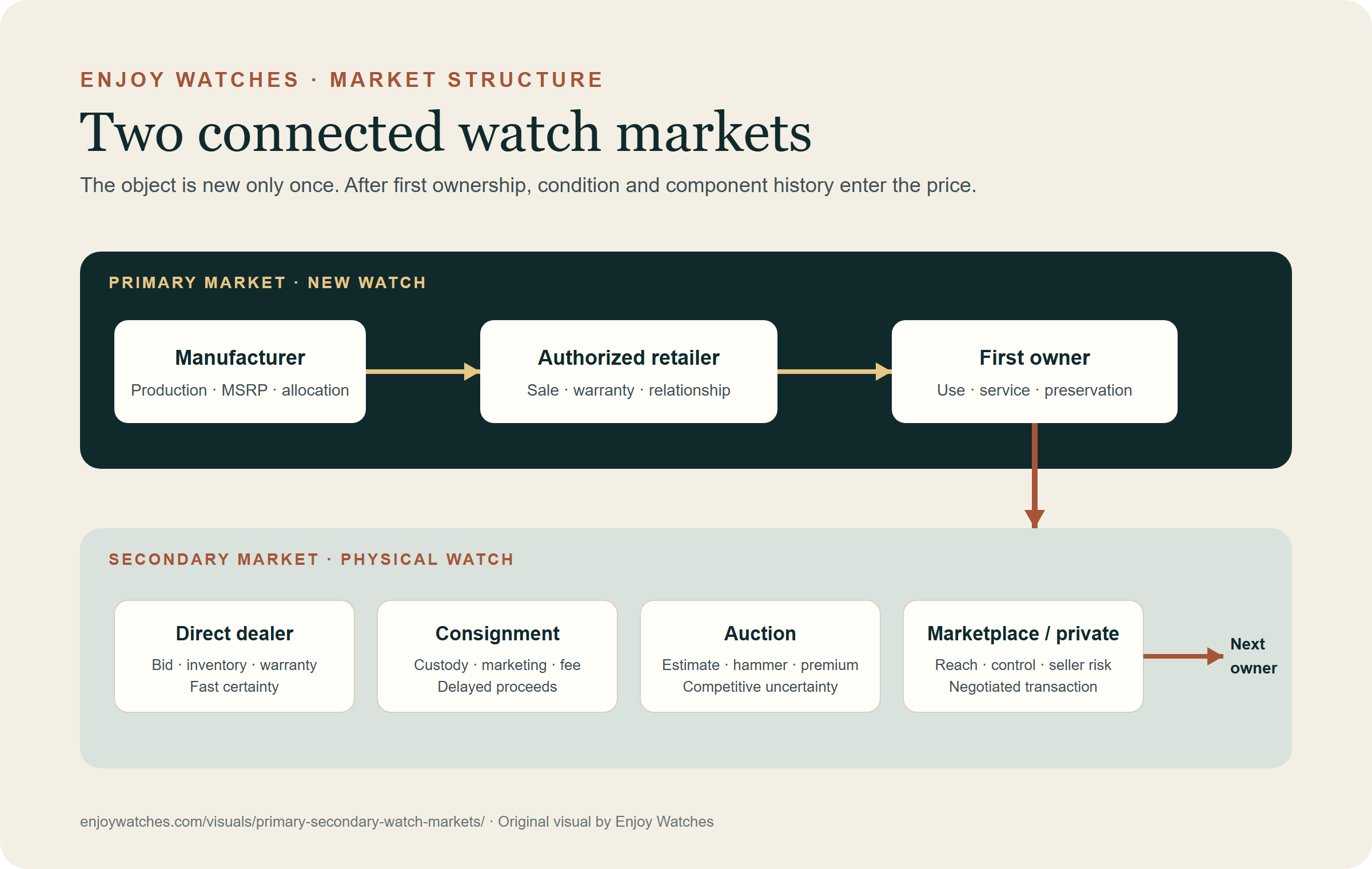
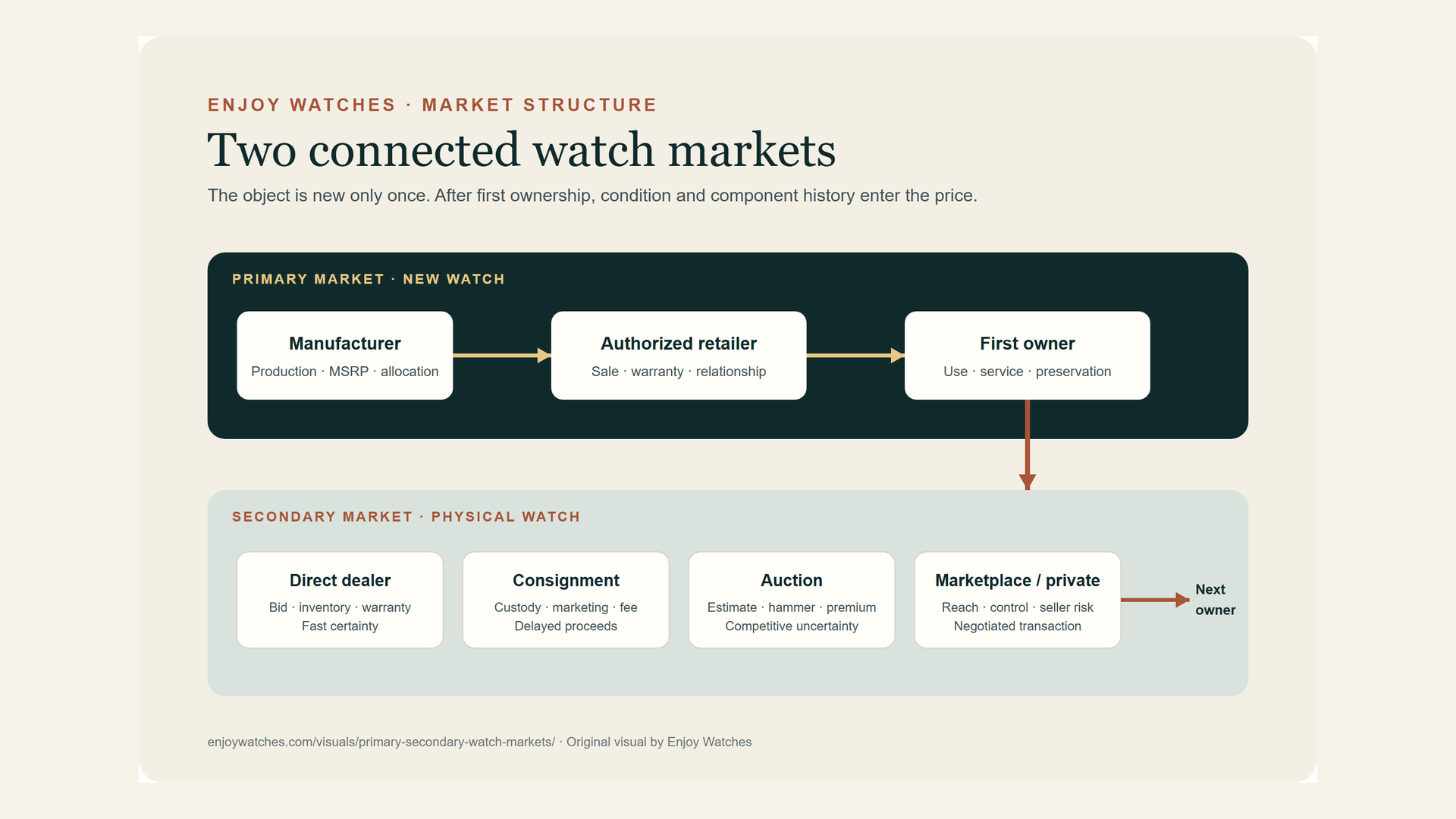
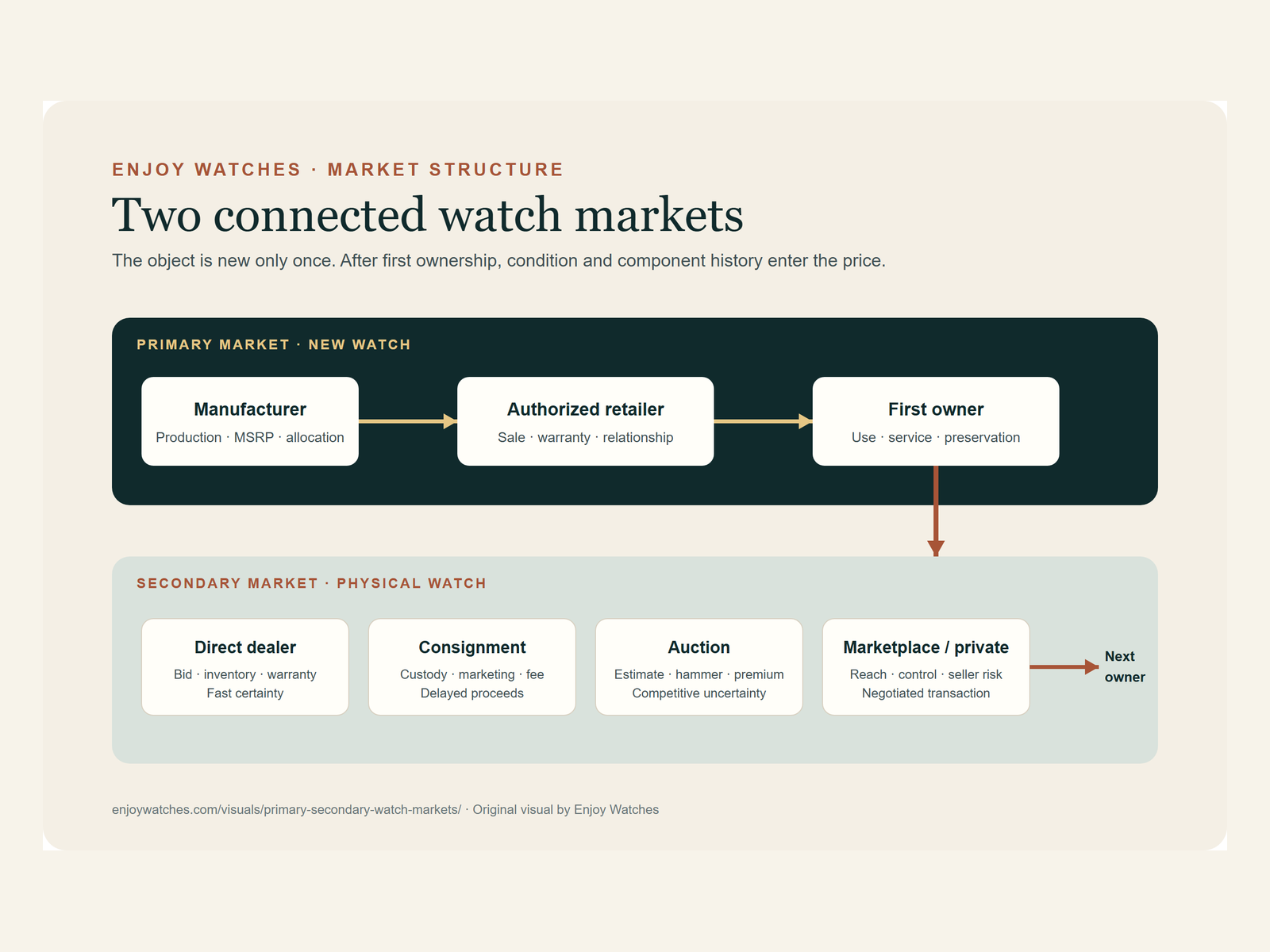
The primary market begins with controlled production and distribution. The secondary market begins when an owner chooses to sell, trade, consign, or auction a physical watch whose condition and component history now matter.
Reuse and attribution
© 2026 Enjoy Watches. You may link to this page or embed the hosted visual with its source intact. A hosted embed makes a normal image request to this site; the supplied code uses referrerpolicy="no-referrer" to avoid sending the embedding page's address. For republication, modification, print, or other reuse, request permission.
Text version of the diagram
Two connected chains show how a new watch moves from manufacturer through authorized retail to a first owner, then enters resale through dealers, marketplaces, or auctions. The secondary path depends more heavily on object condition, documentation, and buyer trust.
How to read it
- Read the primary chain to see how new-product distribution and warranty expectations begin.
- Read the secondary chain to see where an owner’s evidence file and selling channel matter.
- Compare the roles without assuming that a brand fixes every resale price.
What it does not establish
- Primary and secondary prices are not interchangeable.
- Brand control, certification, or service access does not prove the condition or value of a used watch.
Evidence and scope
This original explanatory diagram summarizes commercial roles described in the companion history guide. It is not a map of every seller, platform, or warranty arrangement.
This visual is a companion to The History of Selling Watches. That guide’s source list was last checked August 24, 2026 and contains the evidence used for its claims.
Reuse: The full visual reuse terms permit unchanged hosted embeds with source attribution, not rehosting, modification, print distribution, bundling, or commercial reuse. Request permission for another use.