
Original visual guide
A Timeline of Watch Commerce
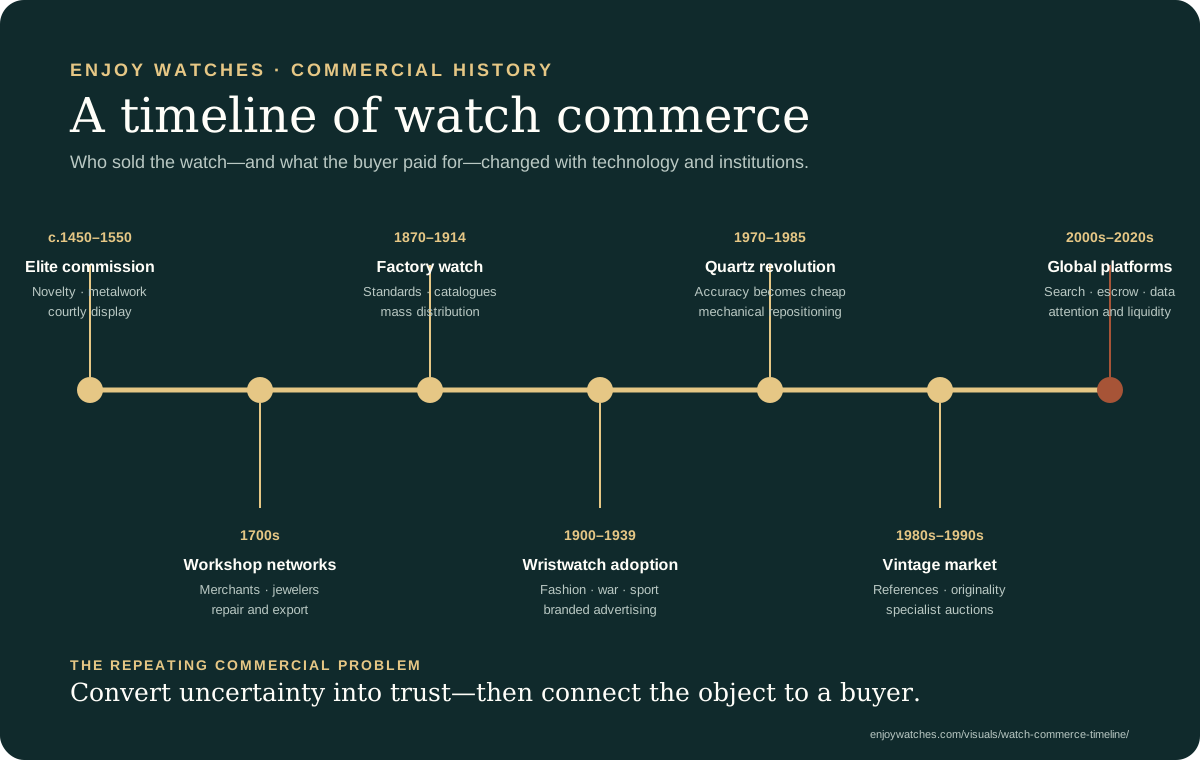
How watch selling moved from elite commissions to workshops, factories, authorized dealers, auctions, and global digital platforms.
Published by Enjoy Watches · Updated August 24, 2026
Visual disclosure
Type: Original explanatory diagram. Creator: Enjoy Watches Research Desk.
Method: Source-led editorial synthesis. Labels, layout, and spatial relationships are illustrative reading aids, not a measured dataset or an inspection of a particular watch.
Evidence boundary: This original explanatory timeline is a companion to the commercial-history guide. It condenses a complex history and is not a comprehensive chronology or price index.
Cite this visual
A stable citation and asset record
Use the canonical visual page when citing or linking. The public media-kit manifest lists this visual's dated formats and canonical address.
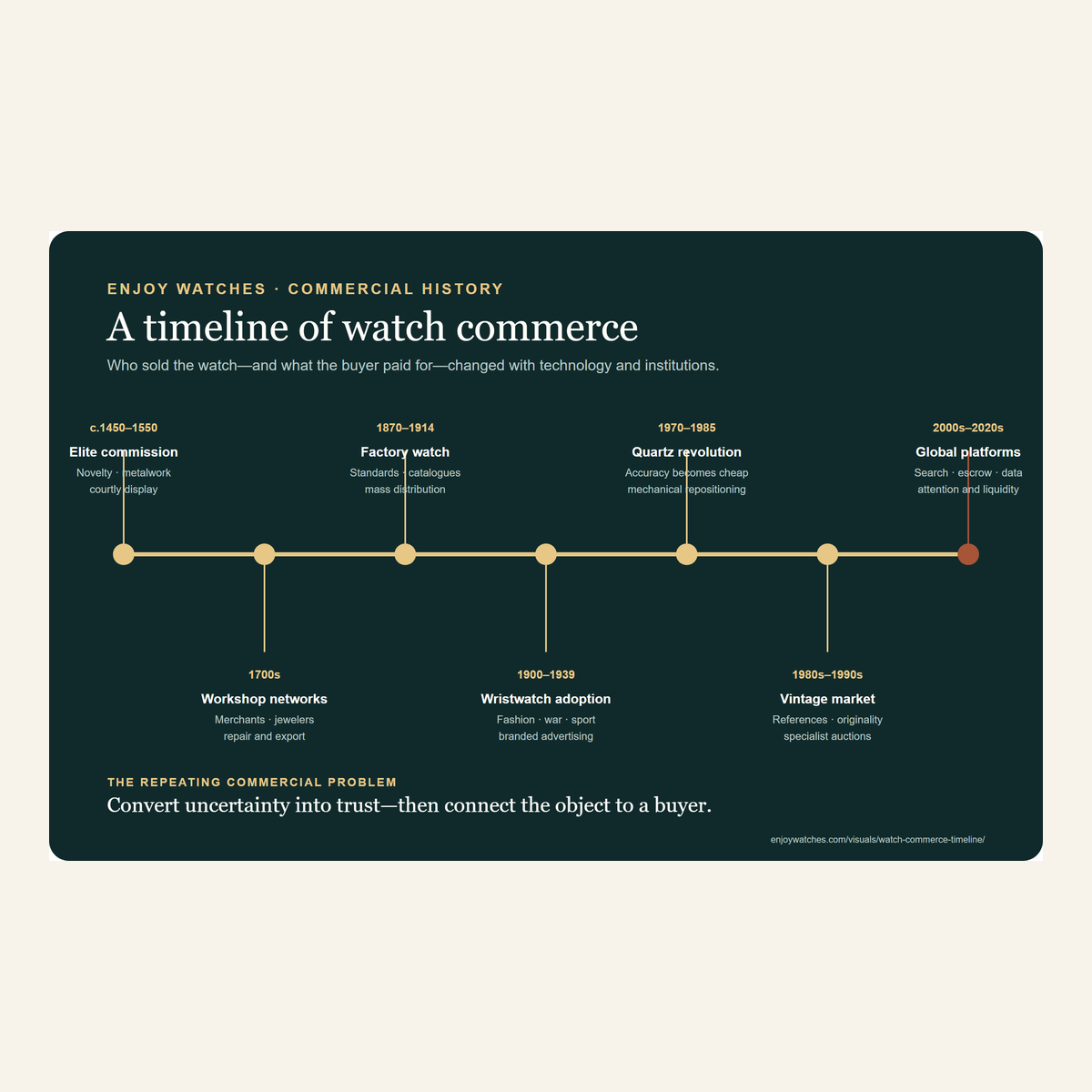
Commercial transformations, not one straight line
Mechanical watches moved from elite portable machines to standardized consumer goods, then became luxury and collectible objects after quartz made accurate time inexpensive.
Reuse and attribution
© 2026 Enjoy Watches. You may link to this page or embed the hosted visual with its source intact. A hosted embed makes a normal image request to this site; the supplied code uses referrerpolicy="no-referrer" to avoid sending the embedding page's address. For republication, modification, print, or other reuse, request permission.
Text version of the diagram
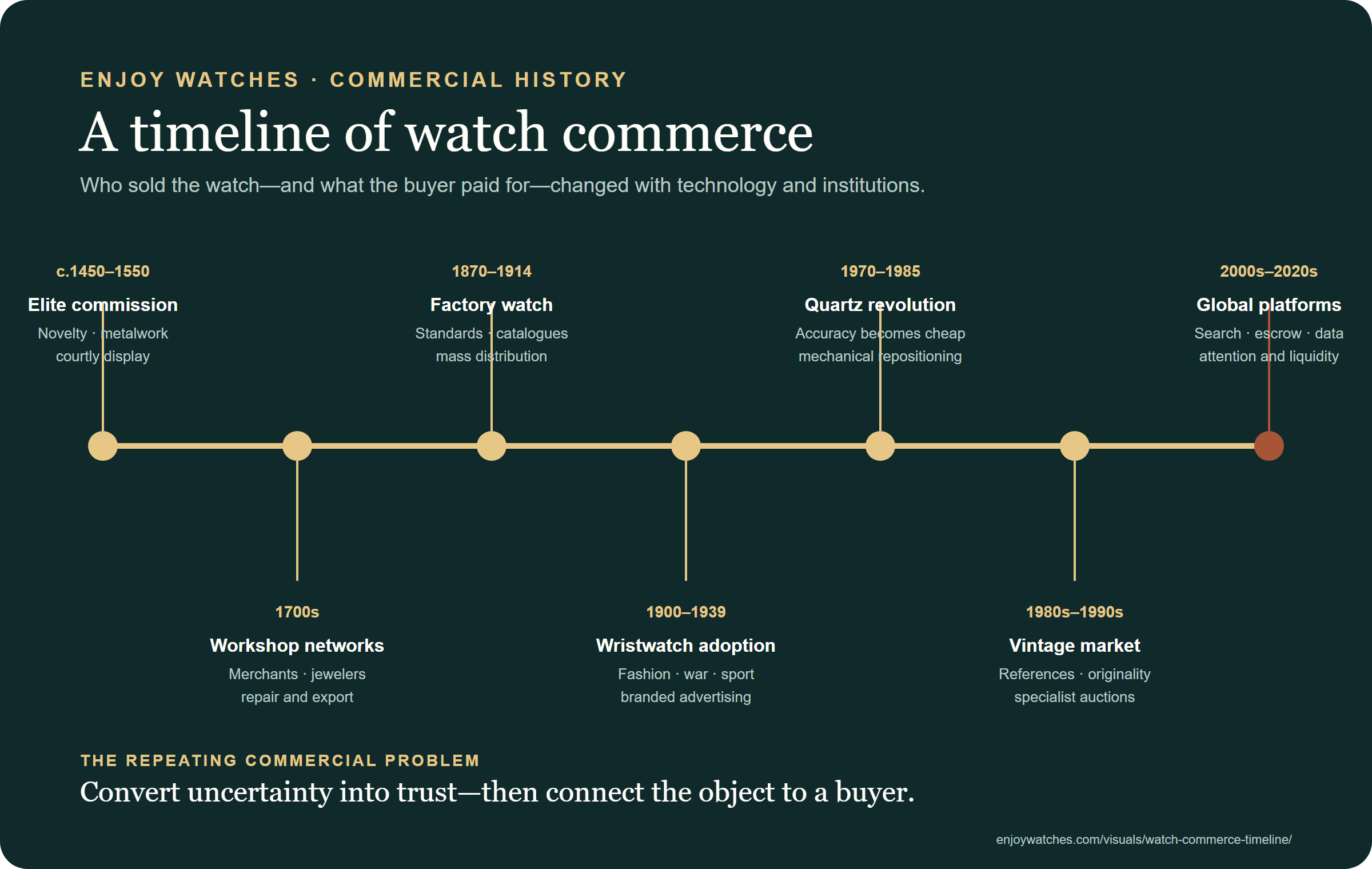
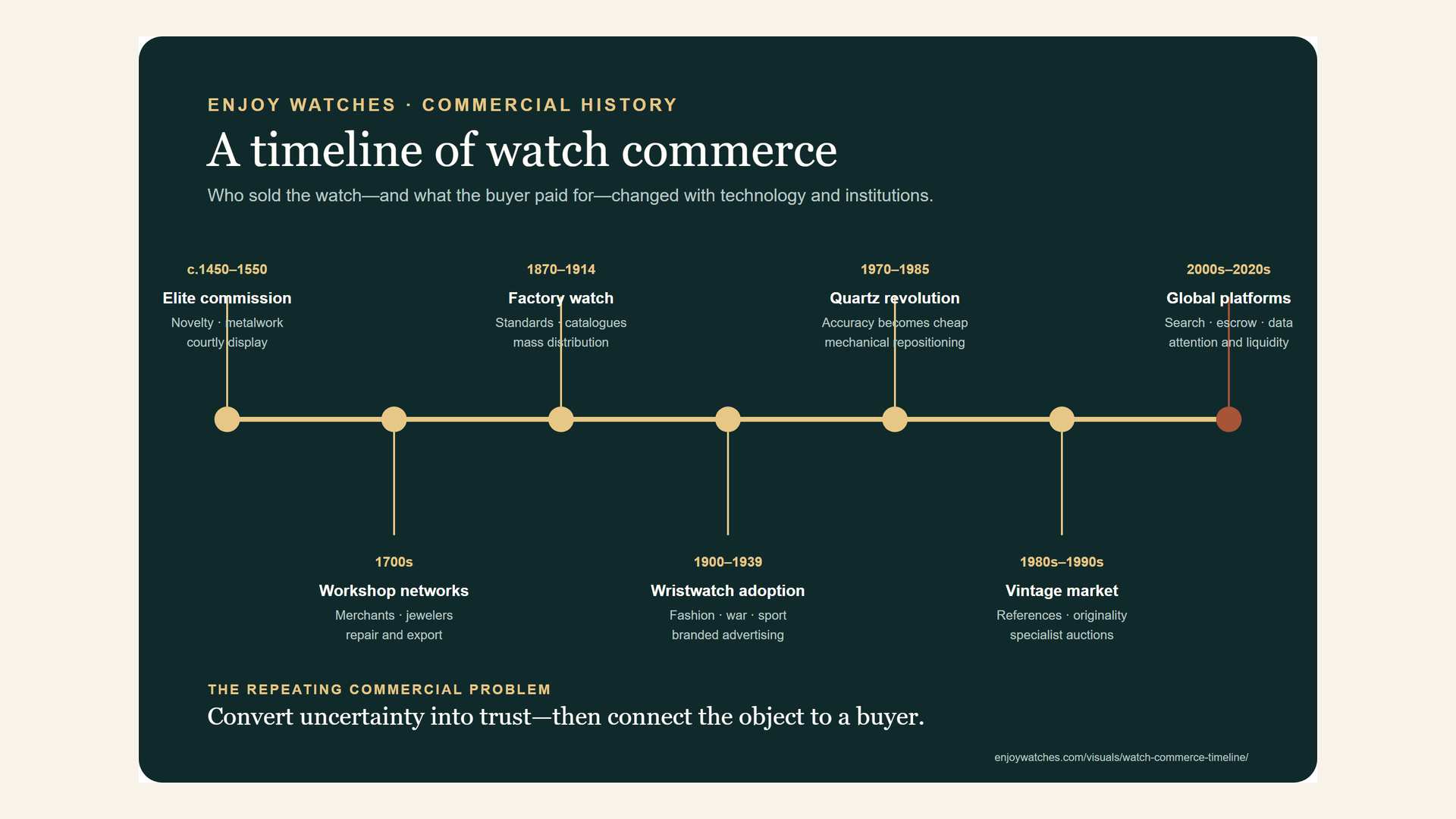
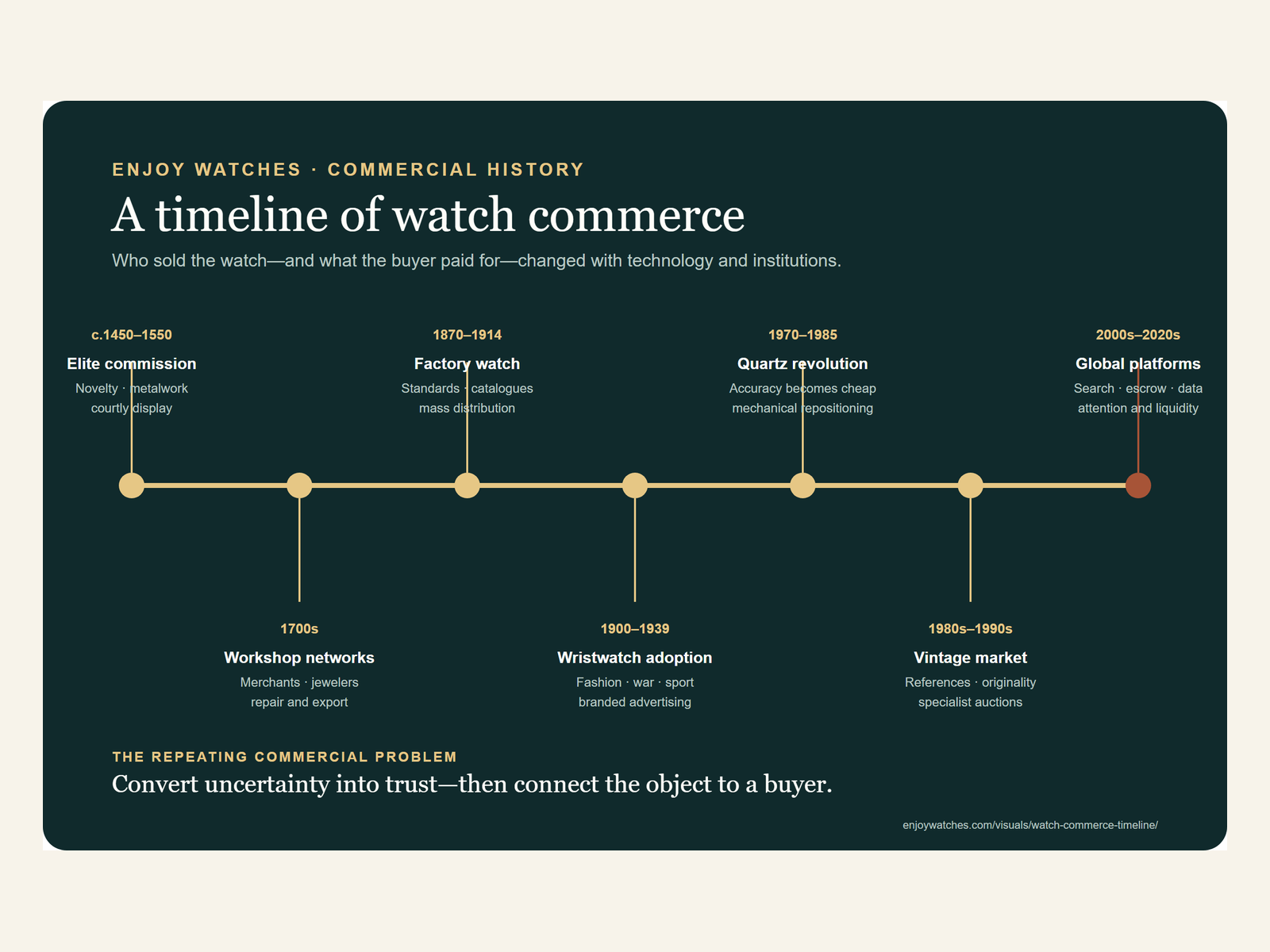
A timeline runs from elite commissions and workshop production through pocket-watch networks, factory systems, wristwatch adoption, quartz, vintage auctions, and online resale. It links each period to shifting sources of value and commercial trust.
How to read it
- Read left to right as a sequence of changing markets rather than a single line of technical progress.
- Notice when value shifted among novelty, materials, function, brand, craft, collector agreement, and platform trust.
- Use the companion guide for the evidence and limits behind each period.
What it does not establish
- The timeline does not establish a universal first watch, first brand, or single cause of market change.
- A historical period does not predict the value of an individual watch today.
Evidence and scope
This original explanatory timeline is a companion to the commercial-history guide. It condenses a complex history and is not a comprehensive chronology or price index.
This visual is a companion to The History of Selling Watches. That guide’s source list was last checked August 24, 2026 and contains the evidence used for its claims.
Reuse: The full visual reuse terms permit unchanged hosted embeds with source attribution, not rehosting, modification, print distribution, bundling, or commercial reuse. Request permission for another use.