
Original visual guide
The Watch Liquidity Ladder
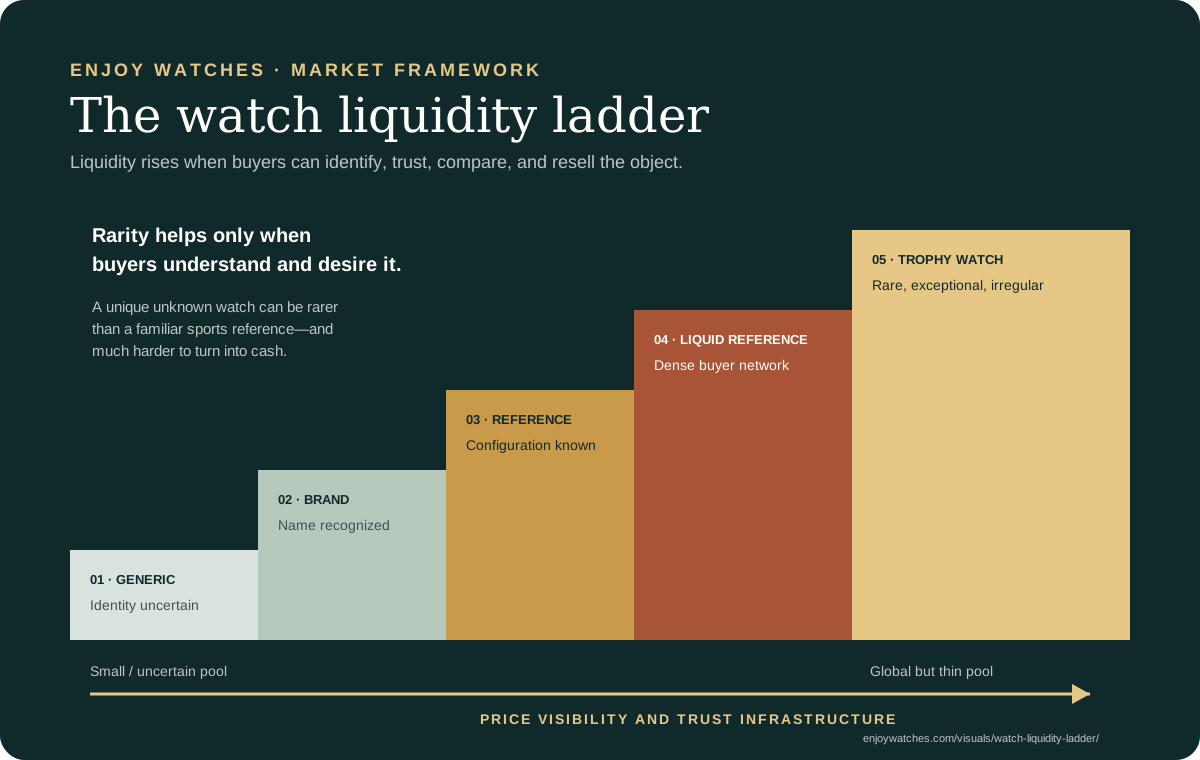
Recognition, documentation, comparability, and trusted transaction infrastructure usually matter more to liquidity than rarity alone.
Published by Enjoy Watches · Updated August 24, 2026
Visual disclosure
Type: Original explanatory diagram. Creator: Enjoy Watches Research Desk.
Method: Source-led editorial synthesis. Labels, layout, and spatial relationships are illustrative reading aids, not a measured dataset or an inspection of a particular watch.
Evidence boundary: This original explanatory diagram summarizes the companion guide’s discussion of market legibility and saleability. It is not a ranking of brands or a current liquidity index.
Cite this visual
A stable citation and asset record
Use the canonical visual page when citing or linking. The public media-kit manifest lists this visual's dated formats and canonical address.
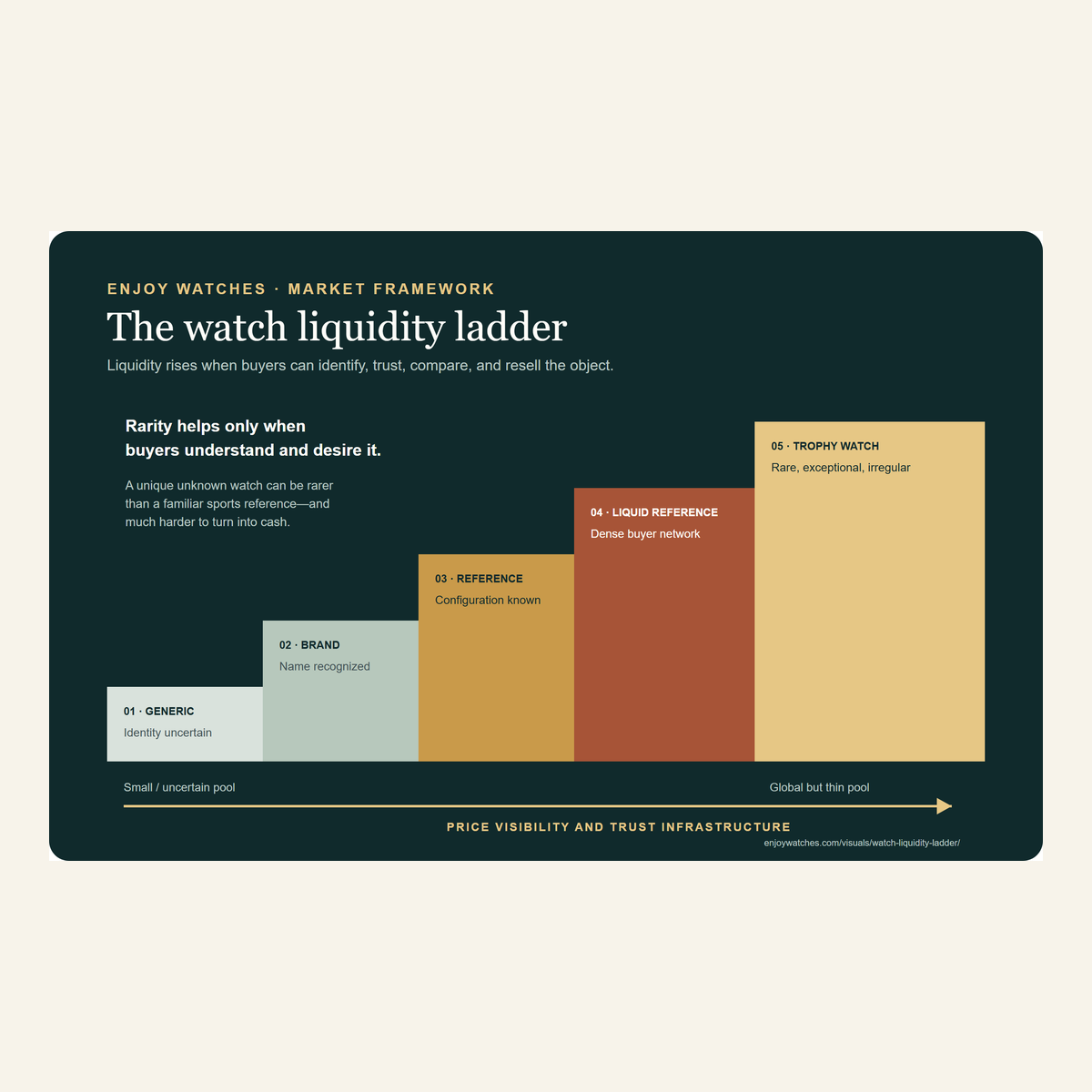
Rarity is not enough
An obscure unique watch can be harder to sell than a widely recognized reference. Identity, comparable transactions, service support, and a trusted buyer network make a market more legible.
Reuse and attribution
© 2026 Enjoy Watches. You may link to this page or embed the hosted visual with its source intact. A hosted embed makes a normal image request to this site; the supplied code uses referrerpolicy="no-referrer" to avoid sending the embedding page's address. For republication, modification, print, or other reuse, request permission.
Text version of the diagram
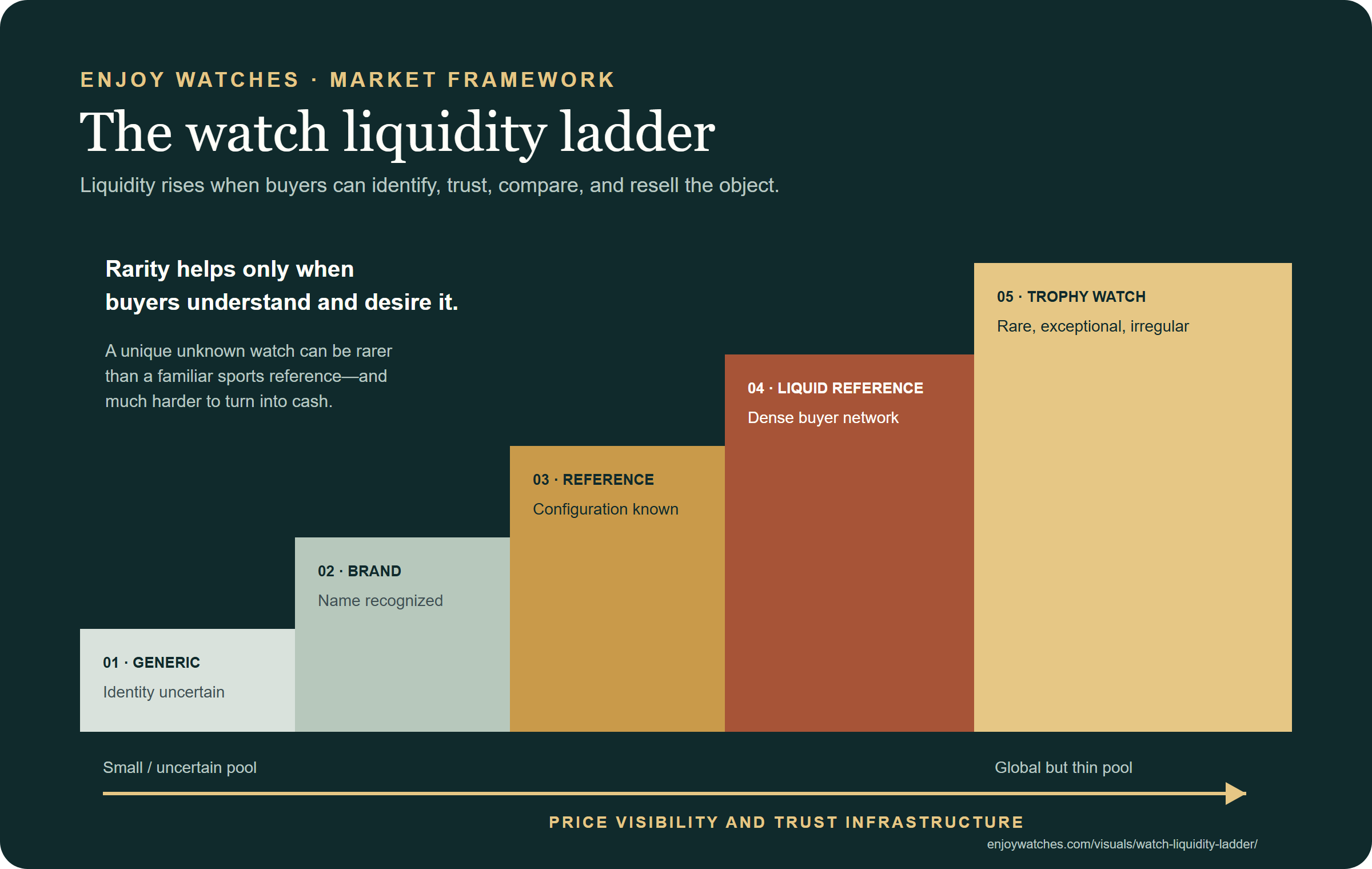
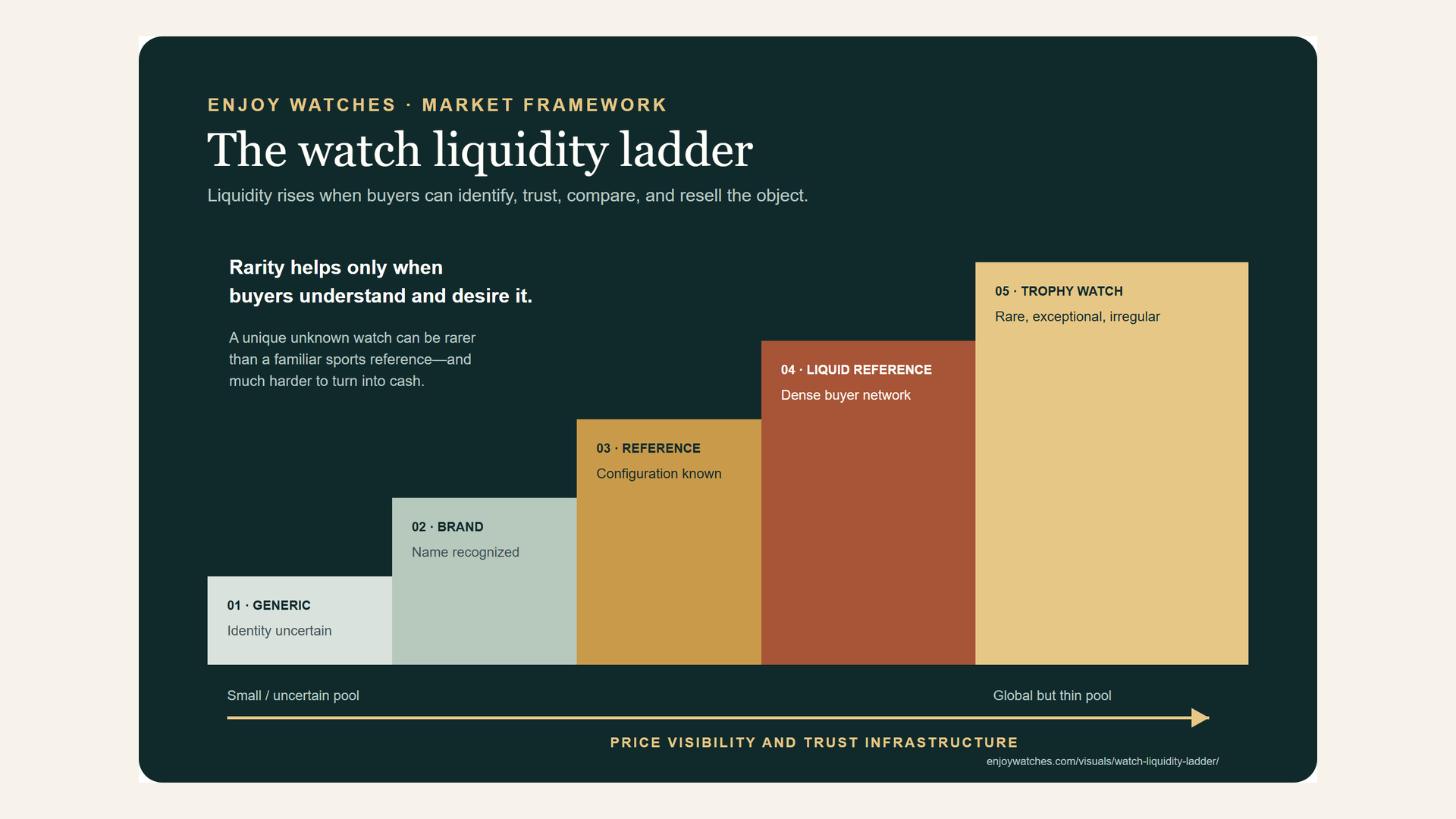
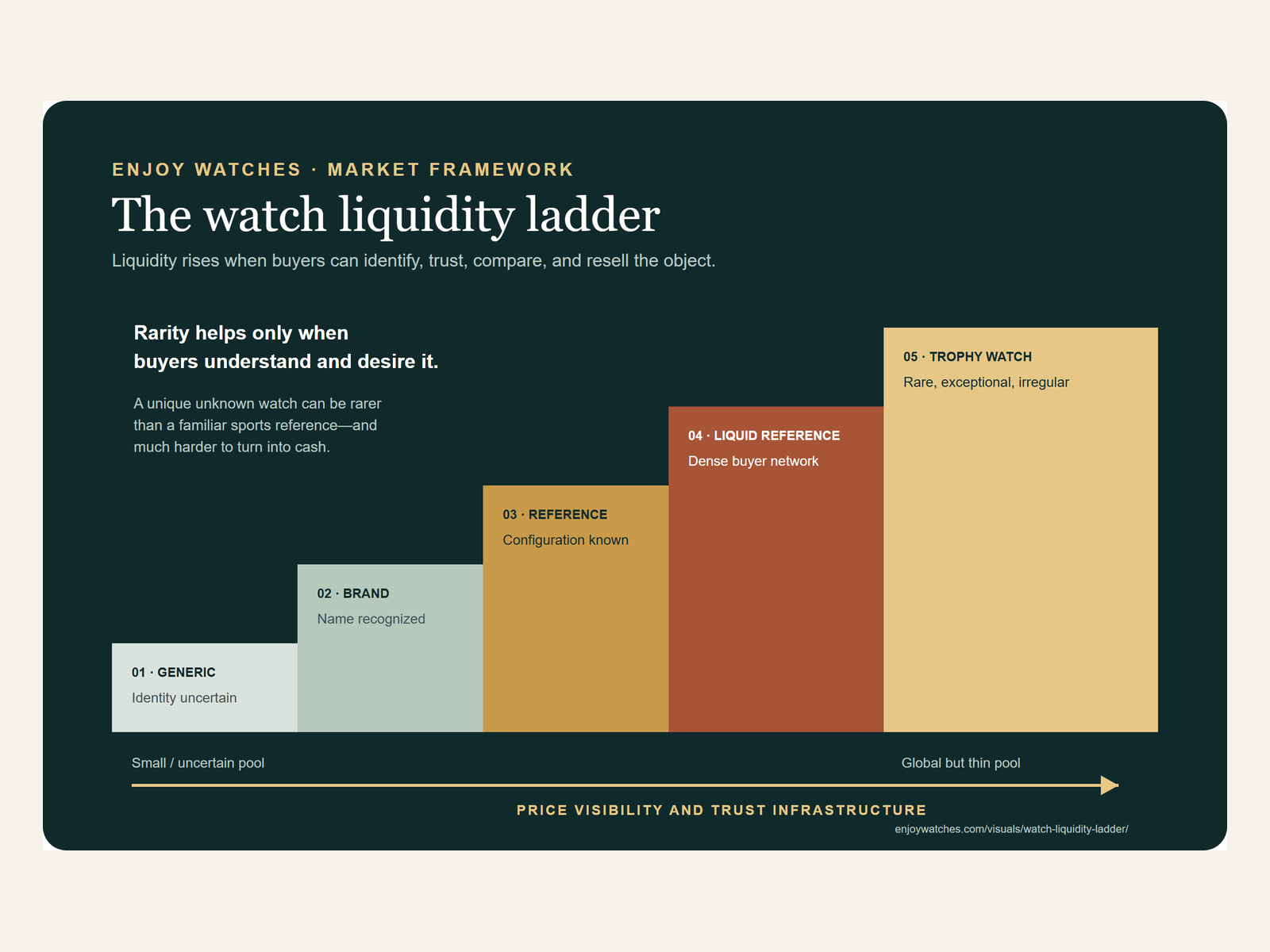
The ladder moves from an unidentified generic watch to a widely recognized trophy watch. Each higher step generally has a broader buyer pool, better price visibility, and more established transaction infrastructure, but every step still depends on the exact object and current market.
How to read it
- Locate the watch by the strength of its identity, documentation, and comparable evidence.
- Ask whether buyers can recognize, inspect, and transact in that category with confidence.
- Use the result to plan research and selling time, not to predict an exact price.
What it does not establish
- Rarity alone does not put a watch higher on the ladder.
- Liquidity is not a guarantee of a quick sale or a particular seller net.
Evidence and scope
This original explanatory diagram summarizes the companion guide’s discussion of market legibility and saleability. It is not a ranking of brands or a current liquidity index.
This visual is a companion to What Is My Watch Worth? A Practical Valuation Guide. That guide’s source list was last checked August 24, 2026 and contains the evidence used for its claims.
Reuse: The full visual reuse terms permit unchanged hosted embeds with source attribution, not rehosting, modification, print distribution, bundling, or commercial reuse. Request permission for another use.