
Original visual guide
Watch Price Vocabulary
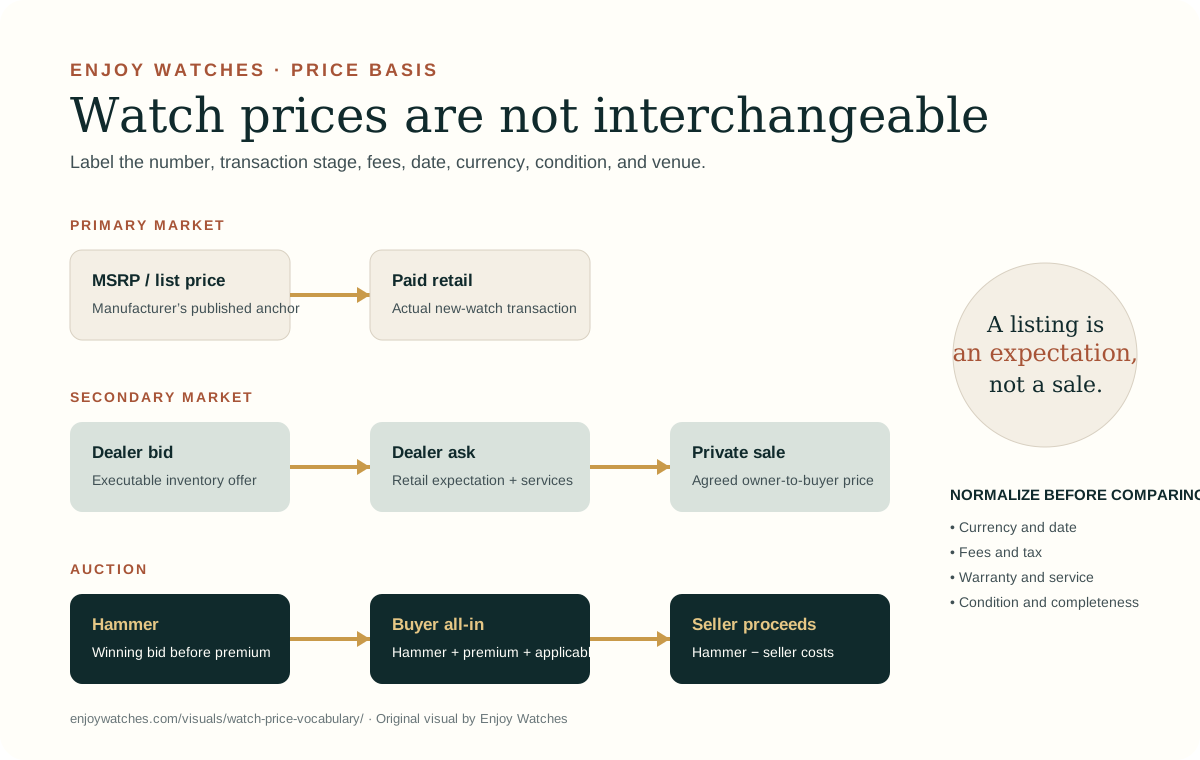
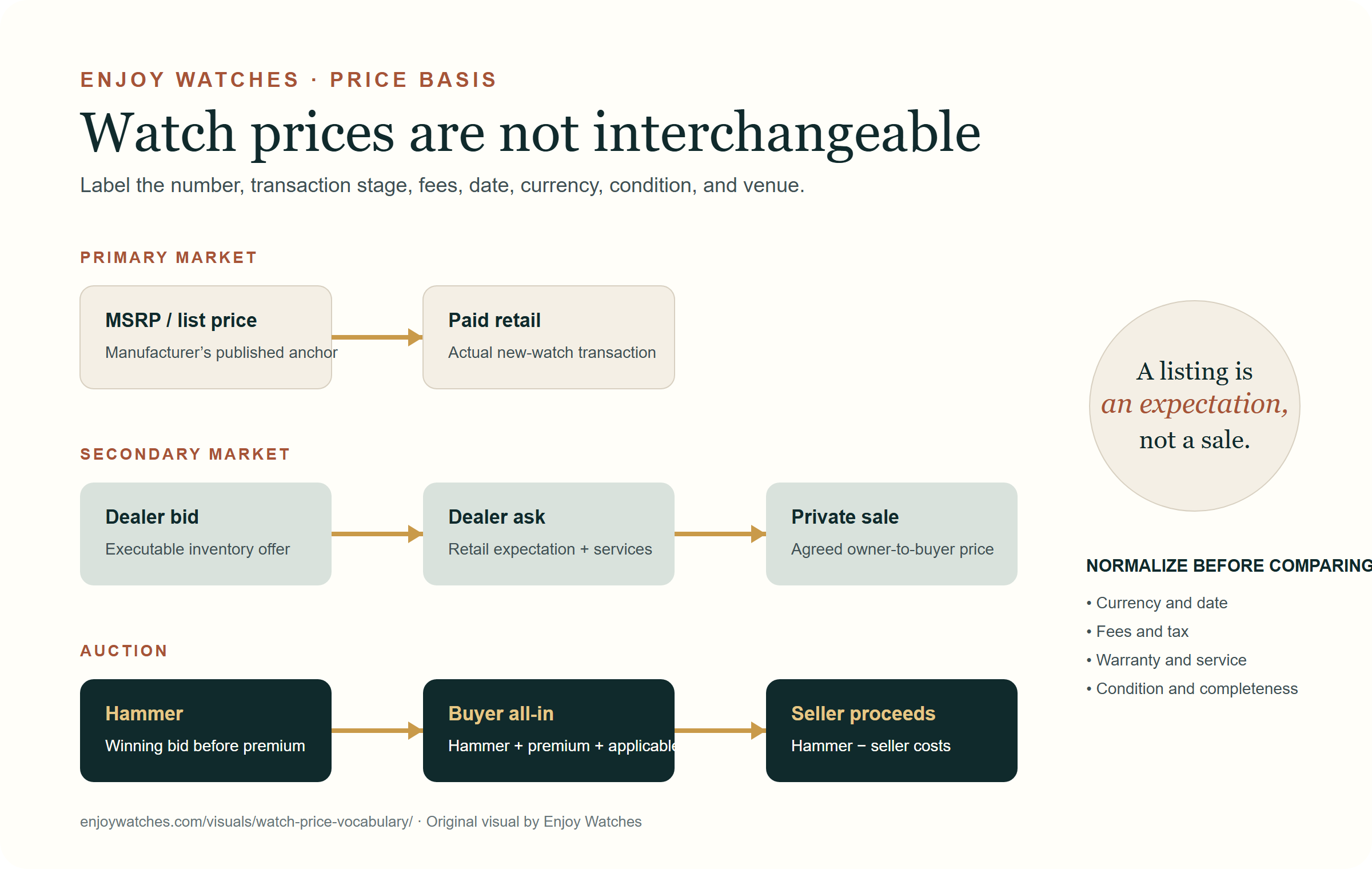
MSRP, asking price, dealer bid, hammer, buyer all-in, and seller proceeds are different numbers created at different moments.
Published by Enjoy Watches · Updated August 24, 2026
Visual disclosure
Type: Original explanatory diagram. Creator: Enjoy Watches Research Desk.
Method: Source-led editorial synthesis. Labels, layout, and spatial relationships are illustrative reading aids, not a measured dataset or an inspection of a particular watch.
Evidence boundary: This original explanatory diagram defines transaction vocabulary used in the companion guide. It is not a live pricing feed or a fee schedule.
Cite this visual
A stable citation and asset record
Use the canonical visual page when citing or linking. The public media-kit manifest lists this visual's dated formats and canonical address.
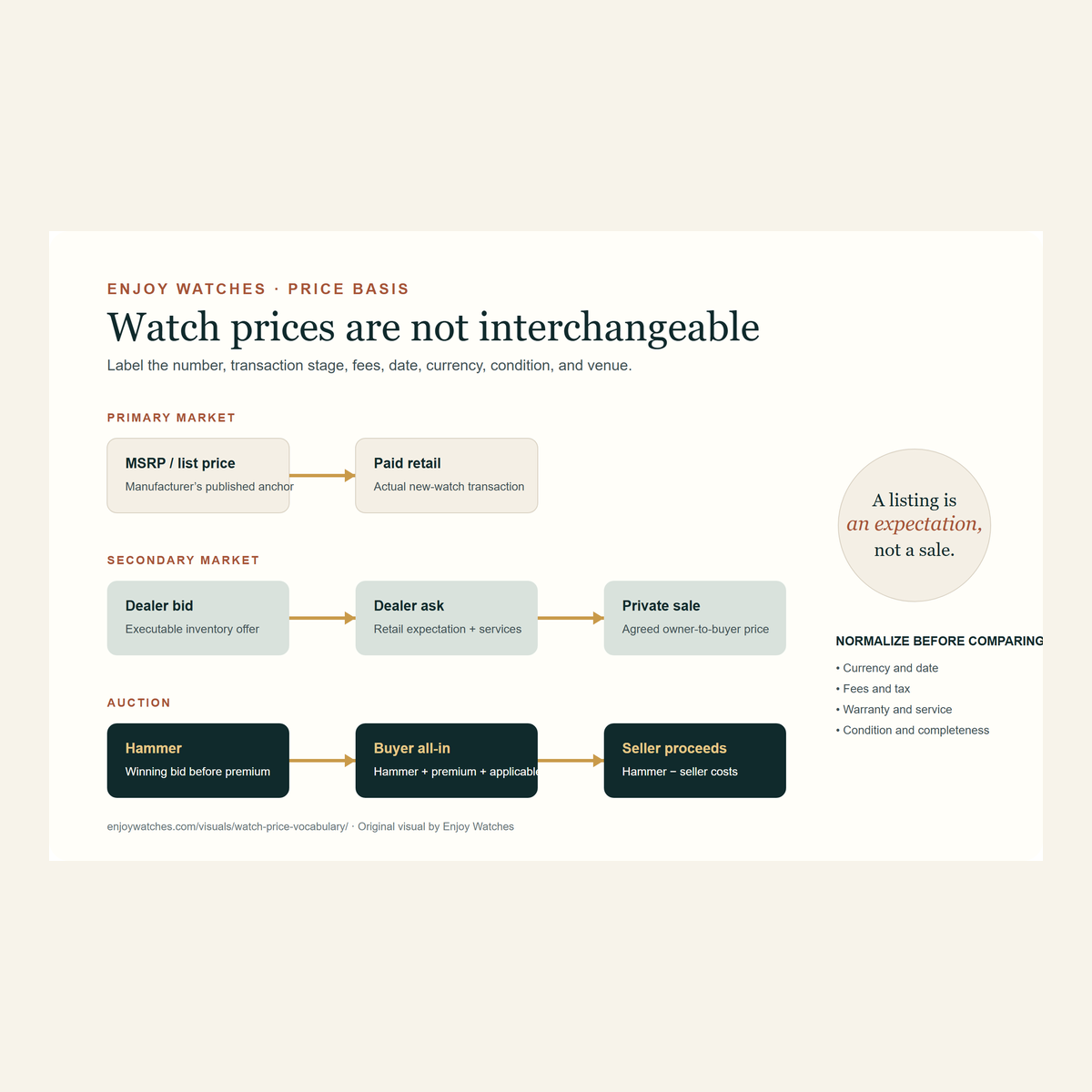
Do not mix unlike prices
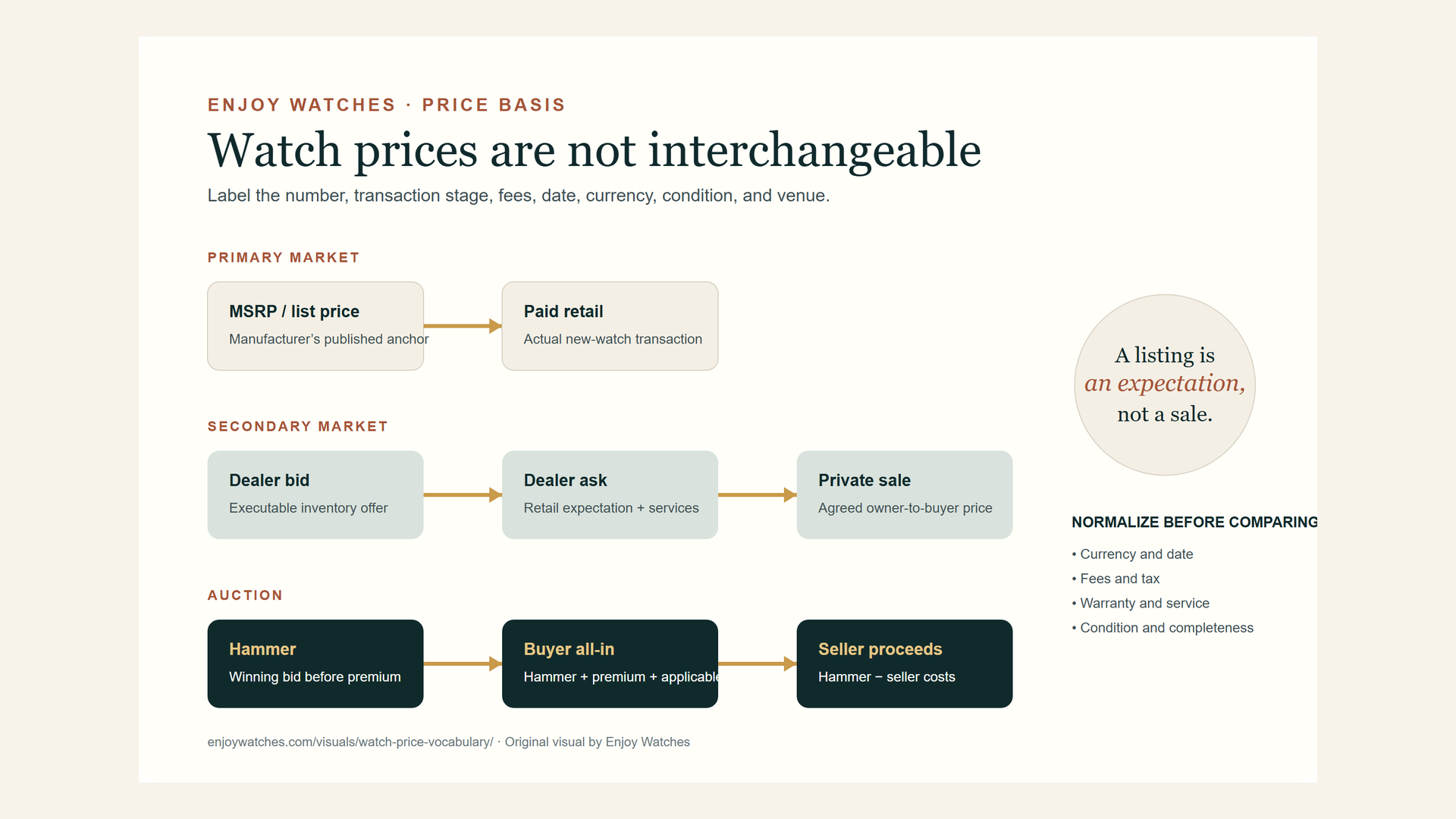
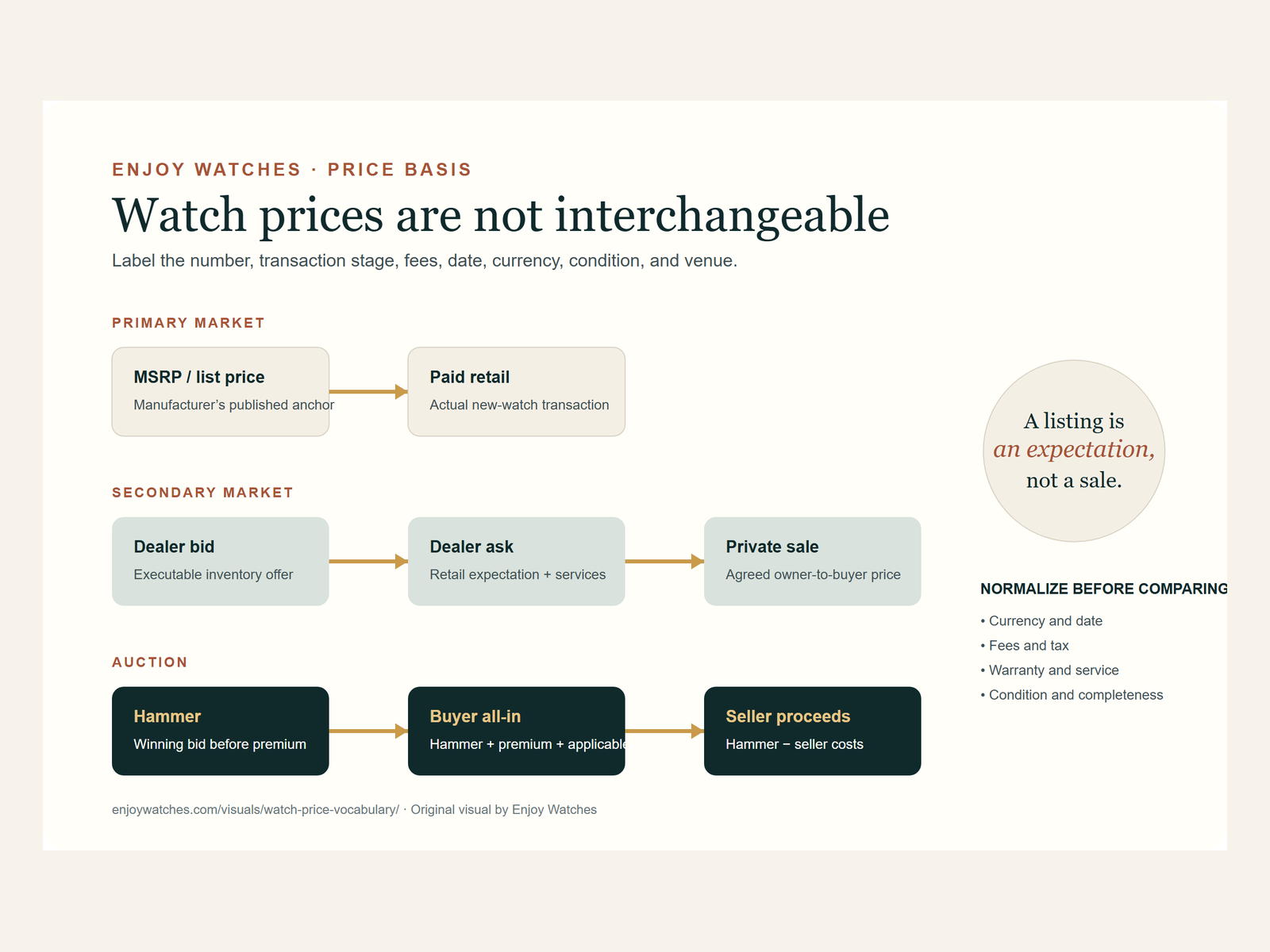
Auction records often emphasize what the buyer paid; sellers receive less after commissions and costs. Listings show expectations, not necessarily transactions. Normalize the basis before comparing watches.
Reuse and attribution
© 2026 Enjoy Watches. You may link to this page or embed the hosted visual with its source intact. A hosted embed makes a normal image request to this site; the supplied code uses referrerpolicy="no-referrer" to avoid sending the embedding page's address. For republication, modification, print, or other reuse, request permission.
Text version of the diagram
The flow separates retail, dealer, private-sale, and auction numbers. MSRP, asking price, dealer bid, auction hammer, buyer all-in cost, and seller proceeds are created at different points and cannot be substituted for each other without labels and deductions.
How to read it
- Identify the venue and whether the number is an ask, bid, completed sale, or estimate.
- Label who pays or receives fees, taxes, commissions, and other costs.
- Keep date, currency, condition, and transaction terms next to the number before comparing it.
What it does not establish
- An auction result is not automatically the seller’s payout.
- A retail or marketplace ask is not proof of a completed market transaction.
Evidence and scope
This original explanatory diagram defines transaction vocabulary used in the companion guide. It is not a live pricing feed or a fee schedule.
This visual is a companion to Watch Price Vocabulary: MSRP, Market Price and More. That guide’s source list was last checked August 24, 2026 and contains the evidence used for its claims.
Reuse: The full visual reuse terms permit unchanged hosted embeds with source attribution, not rehosting, modification, print distribution, bundling, or commercial reuse. Request permission for another use.