
Original visual guide
The Five Forms of Watch Value
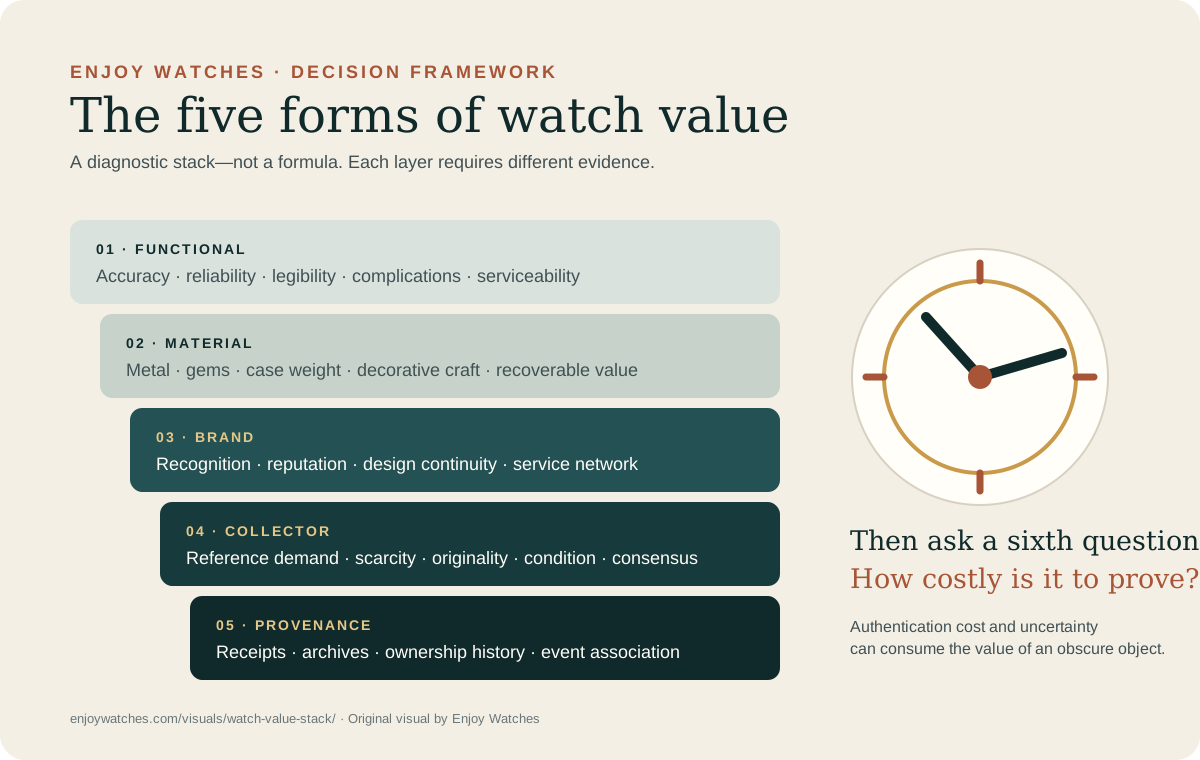
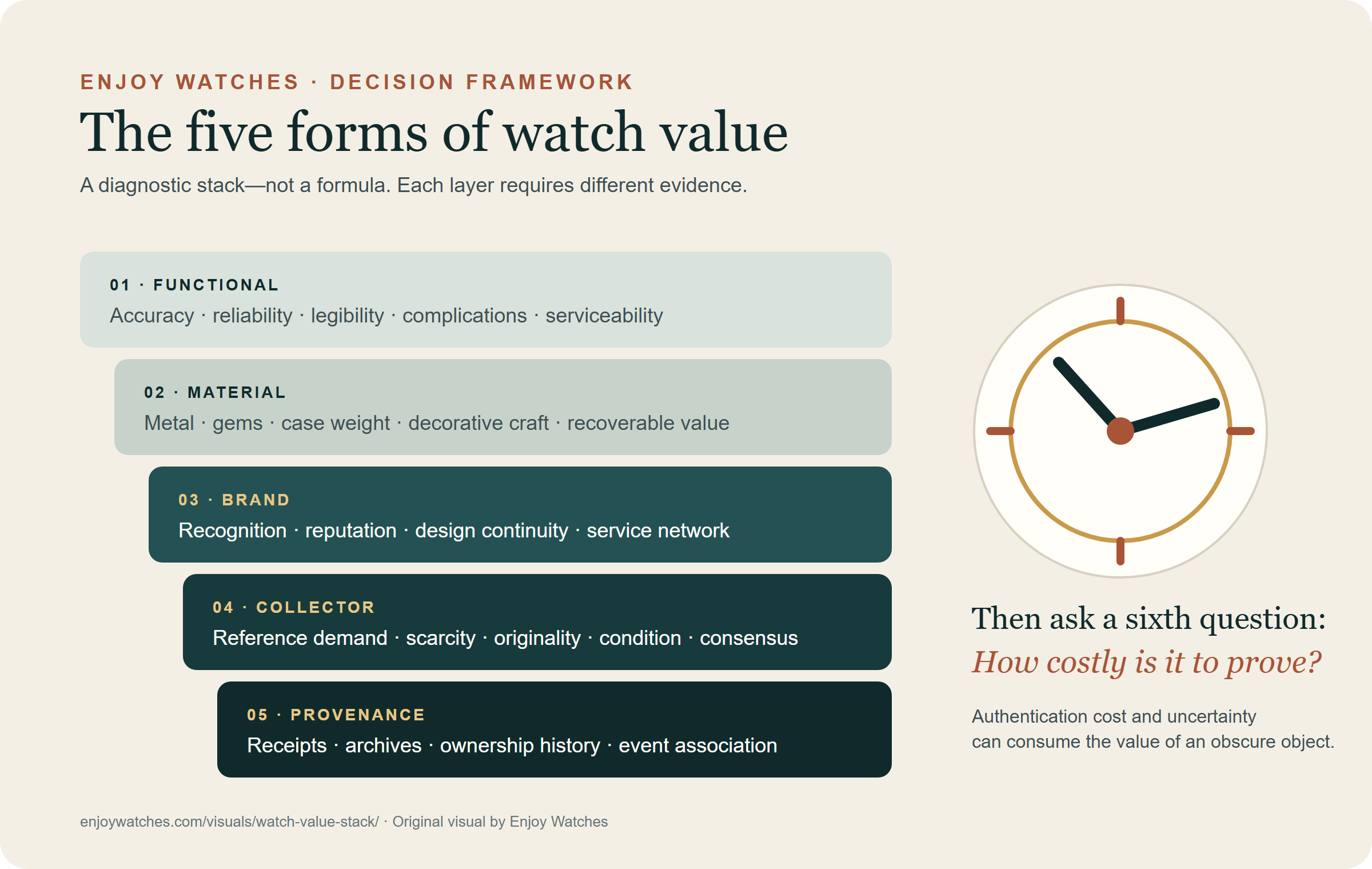
A watch can combine functional, material, brand, collector, and provenance value—and the mix changes by object and era.
Published by Enjoy Watches · Updated August 24, 2026
Visual disclosure
Type: Original explanatory diagram. Creator: Enjoy Watches Research Desk.
Method: Source-led editorial synthesis. Labels, layout, and spatial relationships are illustrative reading aids, not a measured dataset or an inspection of a particular watch.
Evidence boundary: This is an original explanatory diagram based on the framework in the companion guide. It is not a price database, an appraisal, or evidence about a particular watch.
Cite this visual
A stable citation and asset record
Use the canonical visual page when citing or linking. The public media-kit manifest lists this visual's dated formats and canonical address.
How to use it
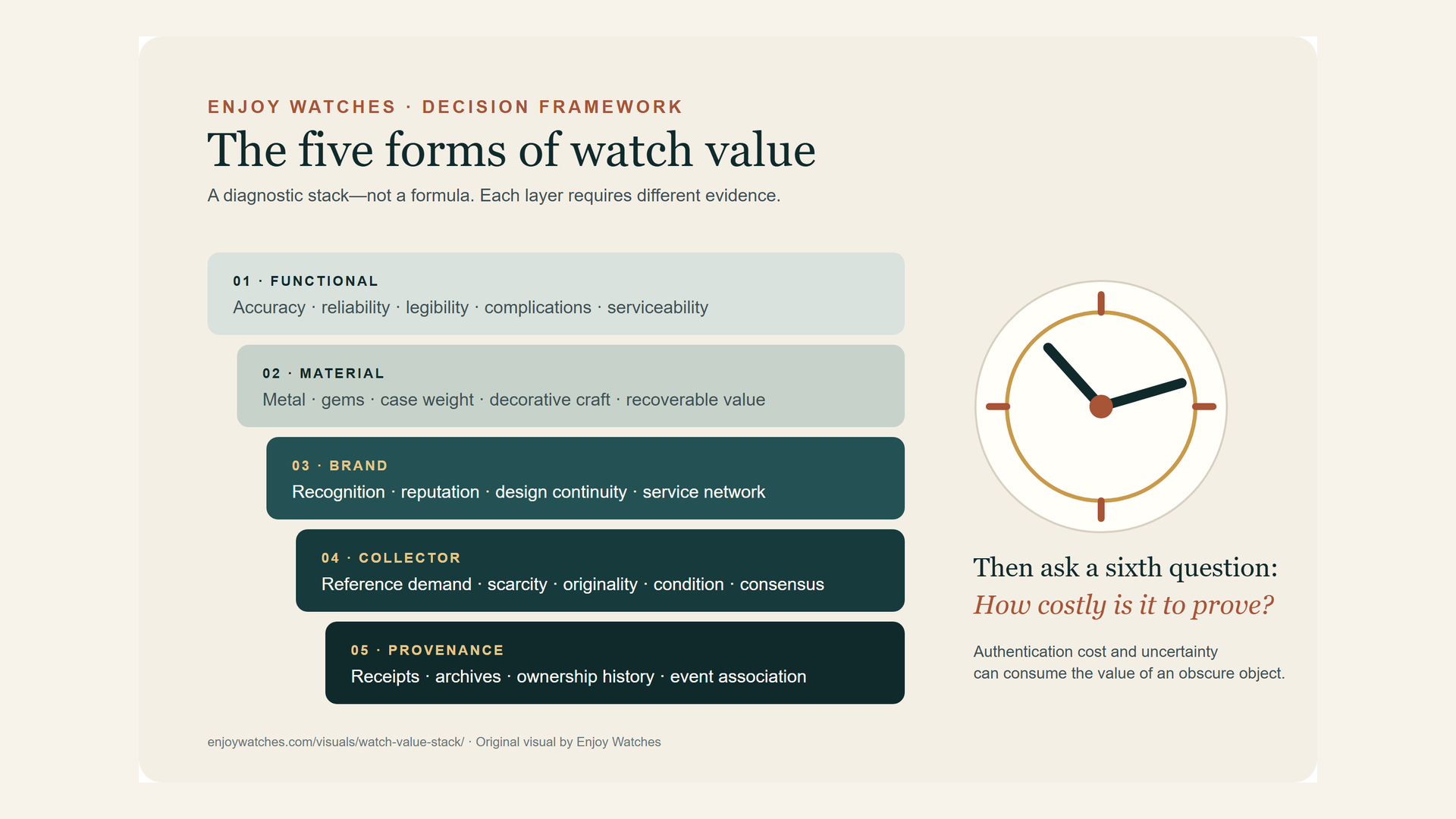
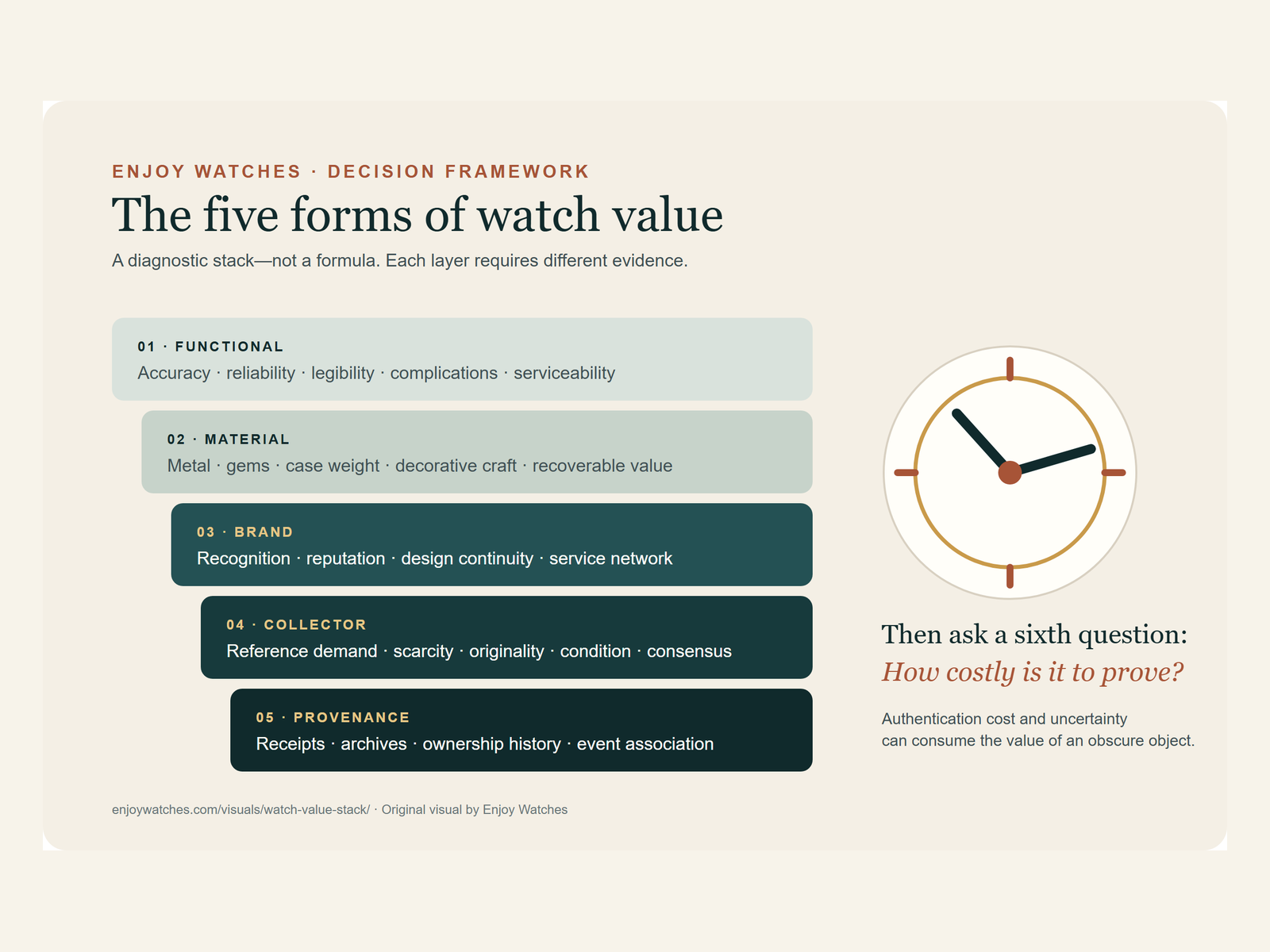
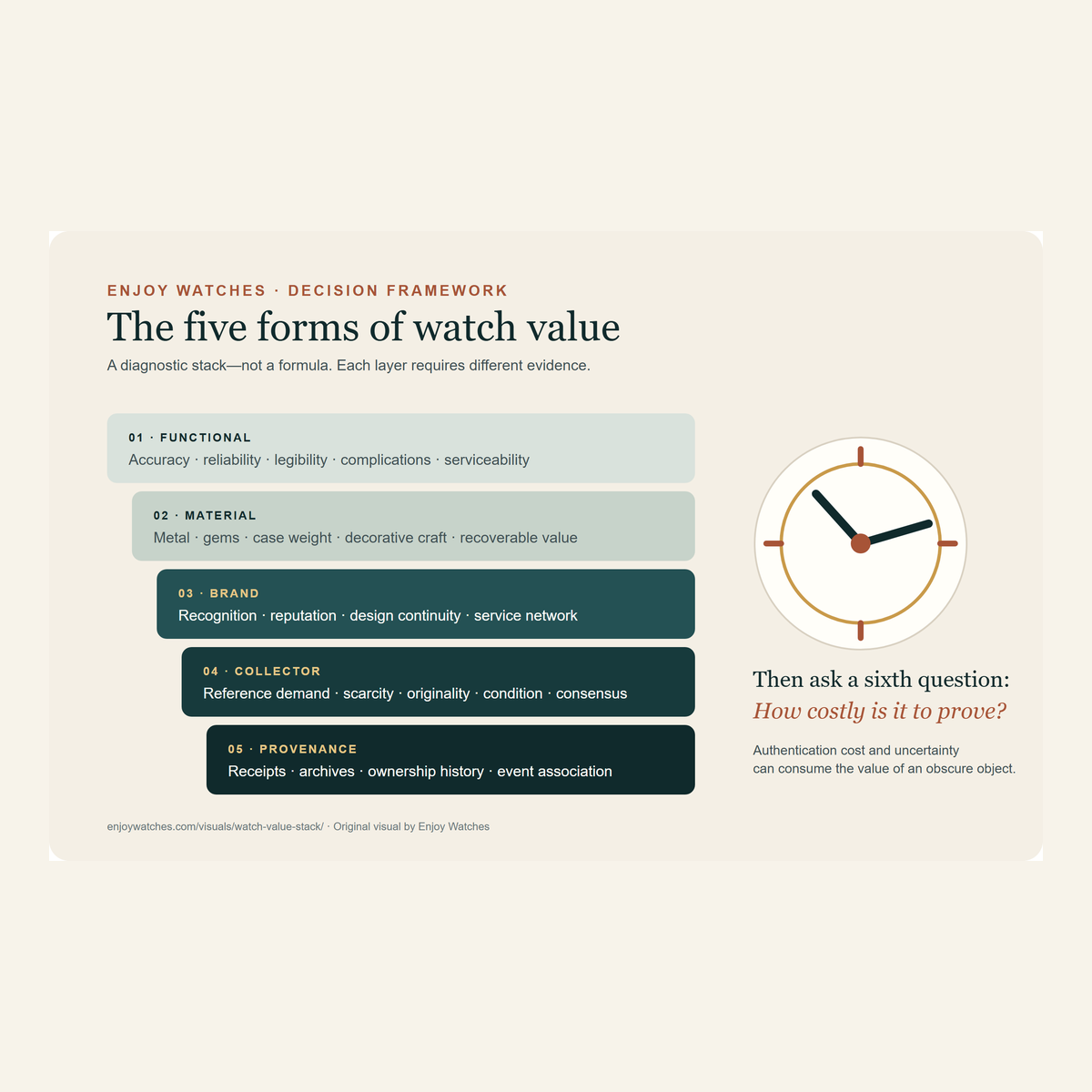
Start at the bottom with function and materials, then add the premiums created by recognition, collector consensus, and documented history. The stack is diagnostic rather than mathematical: it helps identify which evidence still needs to be established.
Reuse and attribution
© 2026 Enjoy Watches. You may link to this page or embed the hosted visual with its source intact. A hosted embed makes a normal image request to this site; the supplied code uses referrerpolicy="no-referrer" to avoid sending the embedding page's address. For republication, modification, print, or other reuse, request permission.
Text version of the diagram
Five stacked bands describe the different reasons a watch may matter: functional usefulness, material content, brand recognition, collector demand, and documented provenance. The bands are prompts for evidence, not ingredients in a price formula.
How to read it
- Start with what the object does and what it is physically made from.
- Then test whether brand recognition and collector demand apply to this exact configuration.
- Treat provenance as a separate claim that needs documents connecting it to this specific watch.
What it does not establish
- The layers do not add up to a universal valuation or market price.
- Age, rarity, or a famous brand does not automatically create demand or liquidity.
Evidence and scope
This is an original explanatory diagram based on the framework in the companion guide. It is not a price database, an appraisal, or evidence about a particular watch.
This visual is a companion to What Is My Watch Worth? A Practical Valuation Guide. That guide’s source list was last checked August 24, 2026 and contains the evidence used for its claims.
Reuse: The full visual reuse terms permit unchanged hosted embeds with source attribution, not rehosting, modification, print distribution, bundling, or commercial reuse. Request permission for another use.